
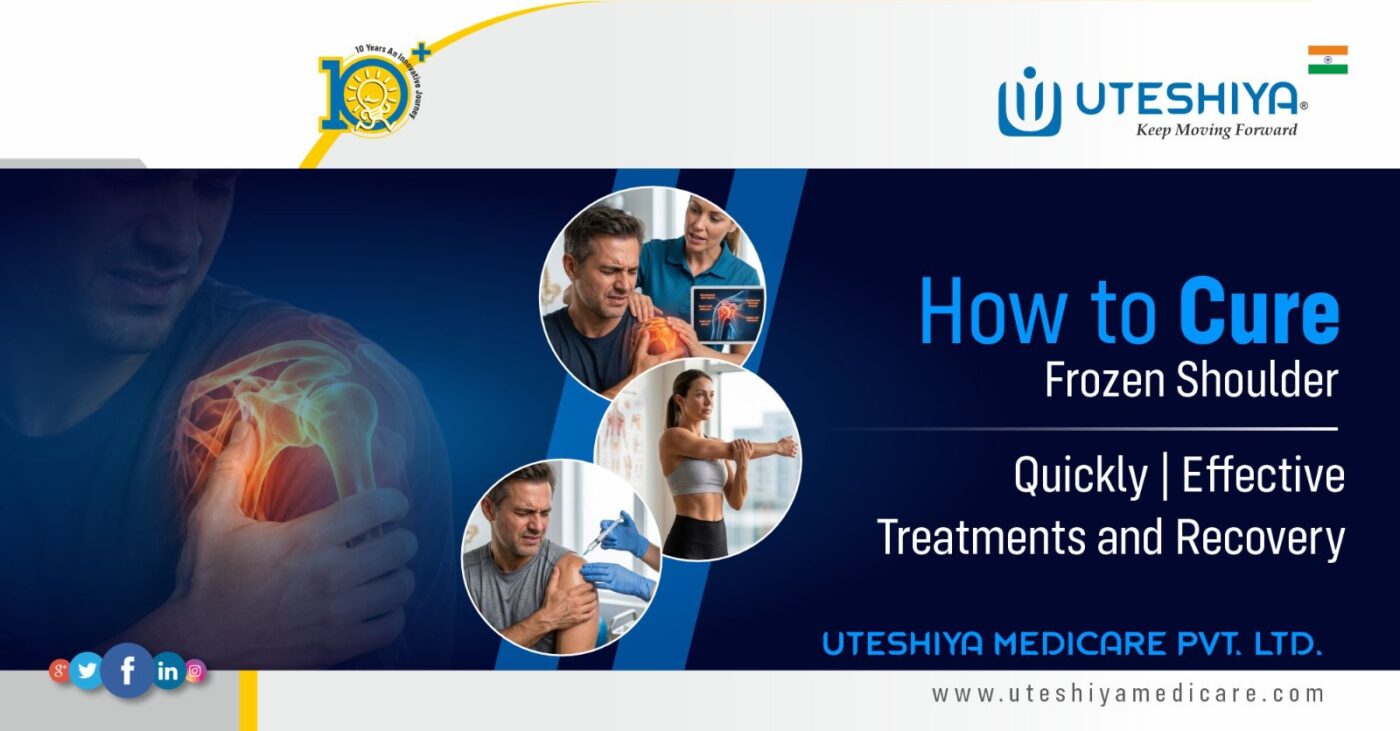
Is shoulder stiffness making simple activities like reaching for a shelf or fastening a seatbelt difficult? Frozen shoulder often develops gradually, and many people assume the pain and stiffness will improve on their own. Often, however, the condition can persist for months without proper treatment. Early medical care, along with appropriate exercises, may help reduce pain, improve shoulder movement, and support a smoother recovery.
Frozen shoulder, also called adhesive capsulitis, affects around 2% to 5% of the general population and is most commonly seen in adults between 40 and 60 years of age. People with diabetes, thyroid disorders, or those who have kept their shoulder still for a long period after surgery or injury are at a higher risk of developing the condition.
Although recovery takes time, early treatment can reduce pain, improve shoulder movement, and make daily activities easier.
What Is Frozen Shoulder?
Frozen shoulder is a condition in which the connective tissue surrounding the shoulder joint becomes thickened and tight. As this tissue stiffens, the joint loses its normal range of motion, making everyday activities difficult and painful.
The shoulder is one of the most mobile joints in the body. It allows you to lift, rotate, and move your arm in different directions. When the joint capsule becomes inflamed, it gradually tightens and restricts these movements. Over time, the shoulder becomes increasingly stiff, and even simple tasks such as dressing, combing your hair, or reaching overhead may become challenging.
Unlike a muscle strain that often improves within a few days, frozen shoulder develops slowly and usually progresses through different stages before recovery begins.
Why Does Frozen Shoulder Develop?
Frozen shoulder does not always have a single cause. In many people, it develops after the shoulder has remained immobile for several weeks due to an injury, surgery, or fracture. Limited movement allows the joint capsule to tighten, reducing flexibility over time.
Certain medical conditions can also increase the risk. Diabetes is one of the strongest risk factors, with people living with diabetes developing frozen shoulder more often than the general population. Thyroid disorders, Parkinson’s disease, cardiovascular disease, and previous shoulder injuries have also been associated with a higher chance of developing the condition.
Age is another contributing factor. Frozen shoulder is more common in adults between 40 and 60 years, and women tend to be affected slightly more often than men.
Sometimes, however, frozen shoulder develops without any obvious trigger. This is known as primary or idiopathic frozen shoulder.
Early Symptoms of Frozen Shoulder
Frozen shoulder usually starts with mild discomfort that many people mistake for a muscle pull or shoulder strain. Over time, the pain becomes more noticeable, and simple movements begin to feel restricted. Many people first realize something is wrong when routine tasks become harder than usual. These are the common symptoms.
- A dull, aching pain in the shoulder
- Stiffness that gradually gets worse
- Difficulty raising your arm above shoulder level
- Pain that becomes more noticeable at night
- Trouble reaching behind your back or across your body
- Reduced shoulder movement while dressing, driving, or lifting objects
If these symptoms continue for several weeks or start affecting your daily routine, it’s a good idea to have your shoulder examined by an orthopedic specialist.
How Frozen Shoulder Progresses
Frozen shoulder usually progresses through three stages. The duration varies from person to person, but understanding these stages helps explain why recovery takes time.
Stage 1: Freezing Stage
This is the painful phase. Shoulder pain gradually increases, especially during movement, and the range of motion slowly decreases. Many people begin avoiding shoulder movements because of discomfort, which can contribute to further stiffness.
Stage 2: Frozen Stage
During this stage, pain may become less intense, but stiffness is often at its worst. Activities such as reaching overhead, fastening a bra, putting on a jacket, or lifting objects become difficult because the shoulder cannot move freely.
Stage 3: Thawing Stage
The shoulder slowly begins to regain movement. With appropriate treatment and regular exercises, flexibility gradually improves, although complete recovery may still take several months.
Can Frozen Shoulder Be Cured Quickly?
Many people hope for a fast cure, especially when shoulder pain starts interfering with work or daily activities. In reality, frozen shoulder improves gradually, and there is no treatment that can reverse it overnight.
Starting treatment soon after symptoms appear often leads to better results. Pain relief, physiotherapy, and regular stretching can improve shoulder movement and reduce discomfort over time. Waiting too long before seeking medical advice, it may allow the joint to become stiffer, making recovery slower.
Treatment Options for Frozen Shoulder
Treatment depends on the stage of the condition and the severity of your symptoms. Most people recover without surgery. Most people recover with non-surgical treatment, although severe cases may need additional procedures.
Medications
Pain relievers and anti-inflammatory medicines can help reduce pain, making it easier to move the shoulder.
Physiotherapy
Regular stretching and guided exercises improve flexibility and gradually restore shoulder movement.
Corticosteroid Injections
These injections may reduce inflammation and provide temporary pain relief, especially during the early stage.
Hydrodilatation
This procedure stretches the joint capsule by injecting sterile fluid, which may improve shoulder mobility in some cases.
Surgery
If symptoms do not improve with other treatments, surgery may be recommended to release the tight shoulder capsule and restore movement.
Can Frozen Shoulder Be Prevented?
Frozen shoulder cannot always be prevented, but keeping the shoulder active after an injury or surgery may help lower the risk. Following your doctor’s advice during recovery, managing conditions such as diabetes, and avoiding long periods of shoulder immobility can also support better shoulder health.
Simple Exercises for Frozen Shoulder
Gentle stretching exercises can gradually improve shoulder movement when performed regularly. Some commonly recommended exercises include:
Pendulum exercise: Lean forward and let the affected arm swing gently in small circles.
Finger walk: Use your fingers to slowly “walk” up a wall as high as comfortable.
Cross-body stretch: Gently pull the affected arm across your chest and hold for 15–20 seconds.
Towel stretch: Hold a towel behind your back with both hands and slowly stretch the shoulder.
Perform these exercises gently and stop if the pain becomes severe. Follow your doctor’s or physiotherapist’s advice before starting a new exercise routine.
When Should You See a Doctor?
Consult an orthopedic specialist if shoulder pain lasts for several weeks, keeps getting worse, or limits your daily activities. Seek medical care sooner if the pain follows an injury or you are unable to lift your arm.
Wrapping It Up
Frozen shoulder can make even simple daily activities difficult, but early treatment and regular shoulder exercises often improve recovery. If shoulder pain and stiffness continue or begin limiting your movement, consult an orthopedic specialist. Timely care can help restore mobility and reduce the chances of long-term stiffness.
