
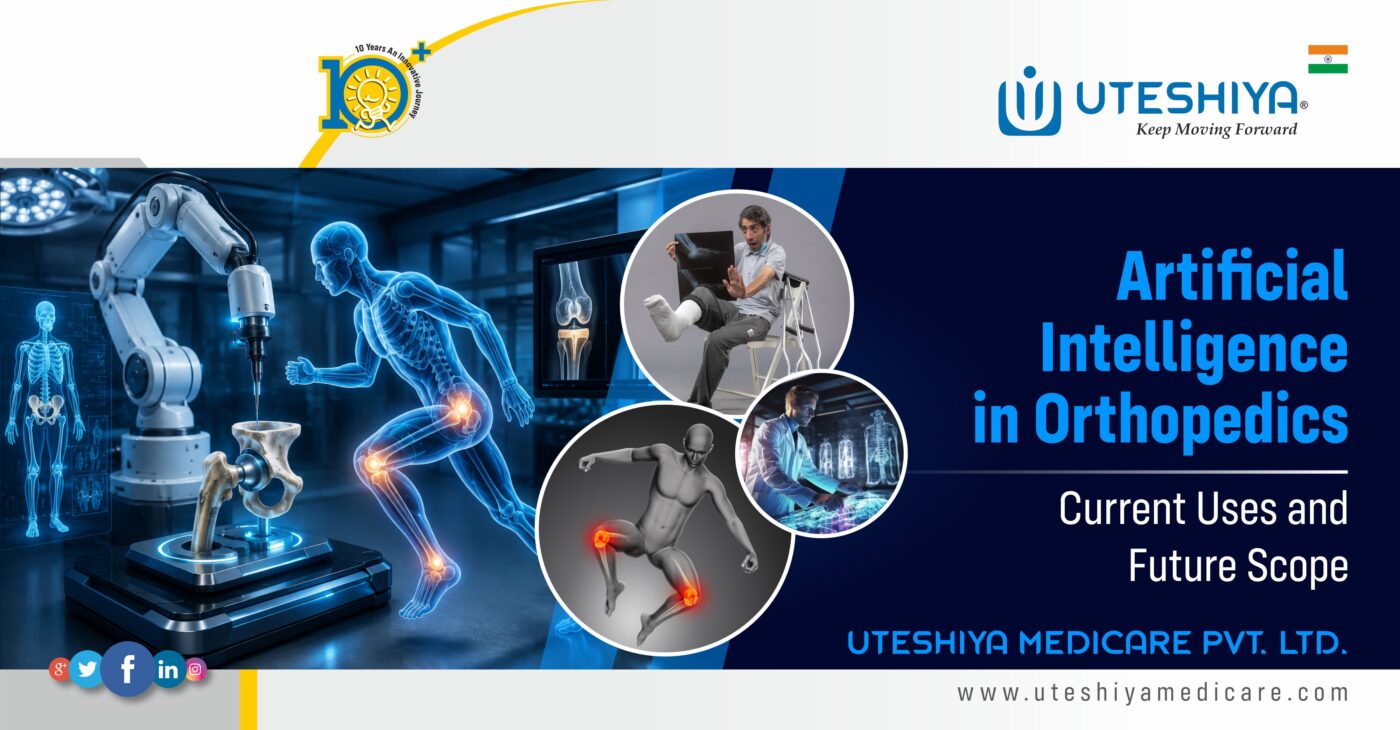
X-rays, CT scans, MRI images, and patient records are used every day to assess orthopedic conditions and plan treatment. New computer-based tools can help doctors review this information, identify certain findings, and prepare for procedures.
In orthopedics, these tools are being studied for specific tasks such as fracture detection, joint assessment, implant identification, surgical planning, and patient follow-up. Some systems examine medical images, while others process patient information to provide measurements or identify patterns.
The purpose is not to make treatment decisions without a doctor. These tools are mainly being developed to assist with tasks that involve large amounts of information or repeated image analysis.
How Artificial Intelligence Is Used in Orthopedic Diagnosis
X-rays are commonly used to examine fractures, bone alignment, joint spaces, and other changes. CT scans can provide detailed views of bone structure, while MRI scans can show soft tissues such as ligaments, tendons, cartilage, and muscles.
Computer-based image analysis can review these scans and identify areas that may need closer attention. Fracture detection is one area where this technology has been studied. A system may mark a suspected fracture on an image so that the doctor can review that area more closely.
- It can help identify possible fractures on X-rays and CT scans for further review by a doctor.
- It can assist with measuring changes in joint spaces and bone structure when assessing conditions such as osteoarthritis.
- It can help doctors compare medical images and identify changes that may need further examination.
- It can provide measurements from medical images that may assist with diagnosis and treatment planning.
The final assessment still needs to come from a qualified healthcare professional. A qualified healthcare professional must consider symptoms, physical examination, medical history, and imaging findings together.
What Role Can AI Have in Implant Identification?
Implant identification is another useful application in orthopedics. Patients who need revision joint replacement surgery may not always have complete records from their previous operation.
Knowing the type and model of an existing implant before surgery can help the surgical team prepare for the procedure. It can also make it easier to determine which instruments and replacement components may be required.
One study found that a deep learning system could identify unique knee replacement implants with 99% accuracy. The result showed that image-based software could assist with a task that may otherwise require manual review of previous records or implant images.
This type of application has a clear clinical purpose. It focuses on one specific problem and provides information that the surgical team can check before treatment.
How AI Can Support Surgical Planning
Orthopedic surgery often requires detailed planning before the procedure. Surgeons may need to assess bone structure, joint alignment, previous surgical changes, and the position of existing implants.
Computer-based systems can help with some of these measurements. In joint replacement procedures, software may assist with assessing bone anatomy and planning implant size or positioning.
Three-dimensional models created from CT scans can also provide a detailed view of a patient’s anatomy. These models can help surgeons study the area being treated before entering the operating room.
The surgeon still needs to review the information and decide how the procedure should be performed. A computer-generated plan may provide useful measurements, but it cannot account for every factor that can affect treatment.
Where AI Can Help During Surgery
Some computer-assisted systems are designed for use during orthopedic procedures. They can provide information about the location of surgical instruments, anatomical structures, and planned positions.
Robotic-assisted systems can also help surgeons perform specific movements with controlled positioning. These systems are generally used under the direction of the surgeon rather than operating independently.
For procedures such as joint replacement, accurate positioning of implants can affect alignment and function. Computer assistance can provide measurements that help the surgeon check the position during the procedure.
The usefulness of these systems depends on their accuracy and how easily they can be used during surgery. A system that adds unnecessary steps may not provide a practical benefit.
Why Data Quality Matters
The results produced by computer-based systems depend on the information used to develop and test them. Medical images can differ because of the equipment used, image quality, scanning methods, and patient characteristics.
A system that works well with one group of patients may not produce the same results with another group. This is why testing across different hospitals, imaging systems, and patient populations is important.
Orthopedic conditions can also vary considerably between patients. Age, bone quality, previous surgery, injury severity, and other factors can affect the appearance of an image.
Doctors therefore need to understand the limits of any computer-generated result. The original image and other patient information should remain available for review.
How AI May Support Orthopedic Rehabilitation
Recovery after orthopedic surgery can involve several stages. Patients may need physical therapy, regular exercises, movement assessments, and follow-up appointments.
Digital tools can collect information about movement and activity during recovery. Wearable devices can record steps, range of motion, or other forms of physical activity, depending on the device and application.
This information can help healthcare professionals understand how a patient is progressing between appointments. It may also help identify whether a patient is completing prescribed exercises.
These tools are not a replacement for physical assessment. Pain, strength, balance, movement quality, and other aspects of recovery still need to be assessed by healthcare professionals.
What Are the Main Challenges?
Accuracy is one of the main concerns when using artificial intelligence in orthopedic care. A system may produce a useful result most of the time but still make mistakes.
For this reason, doctors need to be able to review the information behind a computer-generated result. The system should assist the clinical process rather than make an unexplained decision.
Data privacy is another concern. Medical images, patient histories, and treatment records contain personal information. Healthcare organizations need appropriate safeguards when this information is processed by computer systems.
There is also the question of cost. Hospitals need to consider whether a particular system provides enough clinical value to justify the expense of purchasing, maintaining, and training staff to use it.
The Growing Role of AI in Orthopedic Care
Better image assessment: Computer-based tools may help doctors review X-rays, CT scans, and MRI images and identify findings that need closer examination.
More precise surgical planning: Digital systems can assist with measurements, implant selection, and planning before joint replacement and other orthopedic procedures.
Improved patient monitoring: Wearable devices and digital applications may help track movement, exercise, and recovery after surgery.
Support for clinical decisions: These tools can organize and assess large amounts of patient information, while doctors continue to make the final treatment decisions.
Wrapping It Up
Artificial intelligence can support orthopedic care by helping with medical image review, implant identification, surgical planning, and patient monitoring. Its usefulness will depend on accuracy, proper testing, data quality, and how well it fits into clinical work. Doctors will continue to make treatment decisions, while these tools can assist with specific tasks and provide useful information during patient care.
