
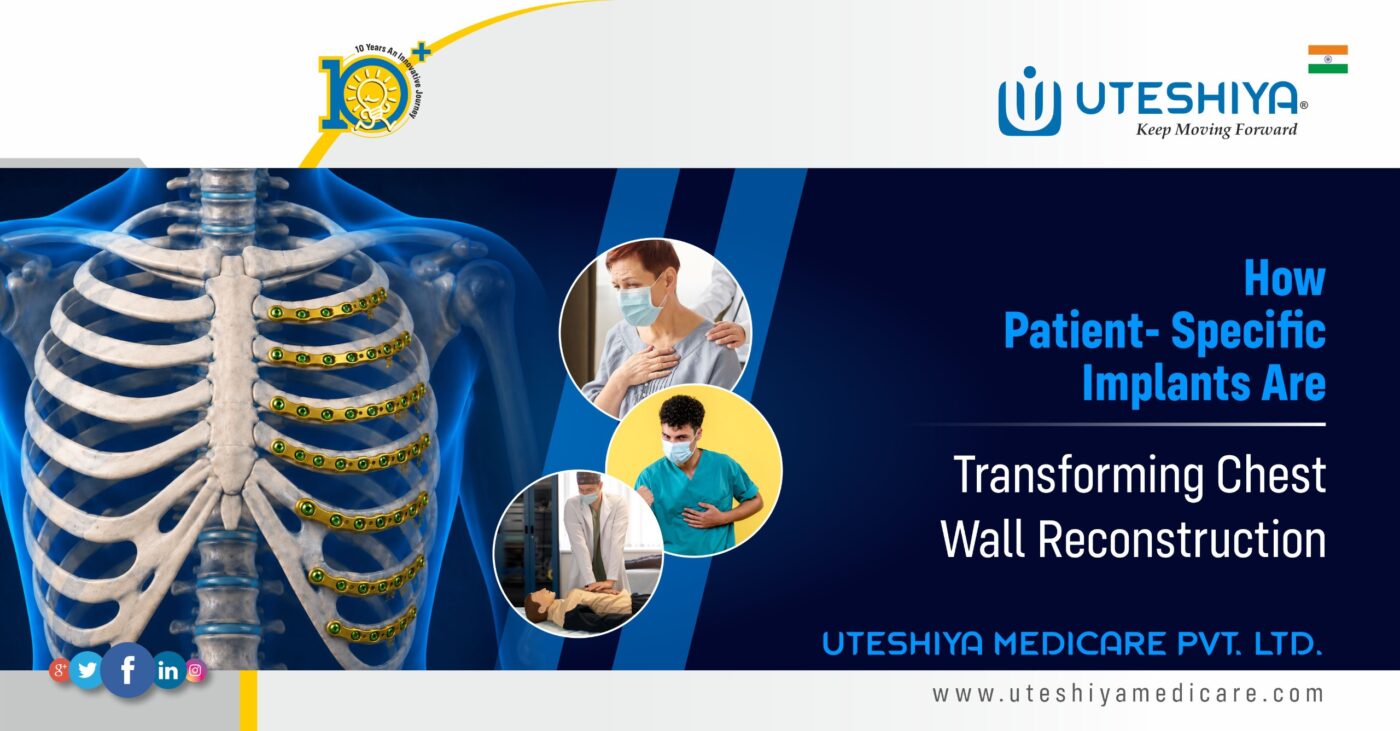
Chest wall reconstruction is one of the most complex areas of thoracic surgery. Unlike many orthopedic procedures, chest reconstruction involves more than replacing damaged bone. The ribs and sternum work together to protect vital organs while supporting normal breathing and upper body movement. When a large section of the chest wall is removed due to tumors, severe trauma, infection, or previous surgical failure, restoring both stability and function becomes a significant challenge.
According to the World Health Organization (WHO), road traffic injuries cause approximately 1.19 million deaths each year. At the same time, many survivors sustain severe chest and musculoskeletal injuries that may require complex reconstructive surgery.
While conventional reconstruction remains suitable for many cases, complex chest wall defects often require patient-specific solutions. Advanced imaging, digital planning, and customized implants help improve surgical precision, stability, and functional recovery.
Why Every Chest Wall Defect Requires a Different Solution
Chest wall defects vary in size, location, and complexity. Some patients lose a single rib after trauma, while others require reconstruction of multiple ribs, the sternum, or both following tumor removal. Previous surgeries, bone quality, and surrounding soft tissue also influence the reconstruction strategy.
Because of these variations, a single implant design cannot meet every surgical requirement. Patient-specific reconstruction allows surgeons to select solutions that are tailored to the exact anatomical defect rather than modifying standard implants during the procedure. This personalized approach supports more accurate reconstruction while helping preserve the natural shape and function of the chest.
How Patient-Specific Technology Is Rebuilding the Chest
Modern chest wall reconstruction begins long before the patient enters the operating room. It starts with a detailed clinical evaluation and digital planning that guide every stage of treatment.
From CT Imaging to Customized Implant Design
Every reconstruction begins with high-resolution CT imaging that creates a detailed three-dimensional model of the patient’s chest. This digital model allows surgeons and engineers to study the defect, evaluate reconstruction options, and design an implant that closely follows the patient’s anatomy.
Instead of adapting implants during surgery, patient-specific implants are prepared before the procedure, improving implant positioning and reducing unnecessary modifications in the operating room.
A Modular Approach for Complex Reconstruction
Large chest wall defects rarely involve a single bone. Reconstruction may require replacing several ribs, part of the sternum, or multiple interconnected structures.
Modern modular implant systems provide greater flexibility by allowing surgeons to reconstruct-
- Individual rib defects
- Multiple rib resections
- Partial sternum reconstruction
- Complete sternum replacement
- Combined rib and sternal defects
This flexibility allows reconstruction to be adapted to the complexity of each case while maintaining stability across the chest wall.
Restoring Stability While Supporting Natural Breathing
One of the primary goals of chest wall reconstruction is to restore mechanical stability without limiting respiratory movement. An implant that is too rigid can restrict chest expansion, while insufficient support may compromise the protection of the heart and lungs.
Patient-specific thoracic implants are designed to recreate the natural biomechanics of the chest wall. By matching the patient’s anatomy more accurately, they help distribute mechanical forces more evenly while supporting normal respiratory function during recovery.
Precision Planning Before Surgery
Careful planning plays a major role in successful thoracic reconstruction. Digital surgical planning enables surgeons to assess the defect, determine implant positioning, and evaluate the reconstruction strategy before surgery begins. This preparation provides many practical advantages.
- Better understanding of complex chest wall anatomy
- Improved implant positioning
- Reduced intraoperative adjustments
- More efficient surgical workflow
- Greater confidence during complex reconstruction
Preoperative planning also allows the surgical team to anticipate potential challenges, making reconstruction more predictable for both surgeons and patients.
Supporting Chest Wall Function After Reconstruction
Successful chest wall reconstruction is not only about replacing missing ribs or the sternum. The reconstructed chest must continue to protect vital organs while allowing the body to function naturally. An unstable chest wall can affect breathing efficiency, posture, and overall recovery, making structural support a critical part of treatment.
Patient-specific reconstruction focuses on rebuilding the thoracic cage as a complete functional unit rather than treating individual bone defects. By restoring the chest’s natural contour, customized implants help maintain symmetry, improve stability, and provide reliable protection for the heart, lungs, and surrounding tissues.
Where Patient-Specific Reconstruction Makes the Greatest Difference
Customized thoracic implants are particularly valuable in complex clinical situations where conventional reconstruction methods may not provide adequate support. These solutions are commonly used for these.
- Chest wall reconstruction after tumor resection
- Severe traumatic rib and sternal injuries
- Complex revision surgeries
- Large chest wall defects involving multiple ribs
- Congenital chest wall abnormalities
- Reconstruction following infection-related bone loss
Because every clinical case is different, patient-specific planning allows surgeons to choose a reconstruction strategy that matches the patient’s anatomy instead of adapting a standard implant during surgery.
Supporting Better Surgical Outcomes
Patient-specific thoracic reconstruction offers advantages throughout the surgical process, from planning to recovery.
Customized implants are designed to fit accurately, helping surgeons perform reconstruction with greater confidence while reducing unnecessary intraoperative modifications. Some of the key advantages are as mentioned below.
- Implant designs based on the patient’s CT scan.
- Improved anatomical fit for complex chest wall defects.
- Better chest wall stability after reconstruction.
- Support for normal respiratory movement.
- Greater protection of vital thoracic organs.
- Reduced need for manual implant shaping during surgery.
- More efficient surgical planning and workflow.
These benefits help create a reconstruction that supports both structural strength and functional recovery while addressing each patient’s individual needs.
Personalized Planning for Better Surgical Outcomes
Thoracic surgery continues to move toward personalized treatment planning, in which every stage of reconstruction is guided by the patient’s anatomy rather than by the limitations of standard implants. Advances in medical imaging, digital engineering, and implant manufacturing have made it possible to plan complex procedures with greater precision before surgery even begins.
This approach also encourages closer collaboration between surgeons, biomedical engineers, and manufacturing specialists. By working together during the planning phase, the surgical team can evaluate complex defects, optimize implant design, and prepare a reconstruction strategy that supports safer procedures and more predictable outcomes.
Wrapping It Up
Chest wall reconstruction requires a careful balance of stability, protection, and natural movement. While conventional implants remain suitable for many routine procedures, complex thoracic defects often require a more personalized approach.
Patient-specific thoracic reconstruction combines advanced imaging, digital planning, and customized implant design to help surgeons rebuild the chest with greater precision and confidence. As personalized technologies continue to advance, they are supporting more accurate reconstruction, better respiratory function, and improved long-term outcomes for patients requiring complex thoracic surgery.
