
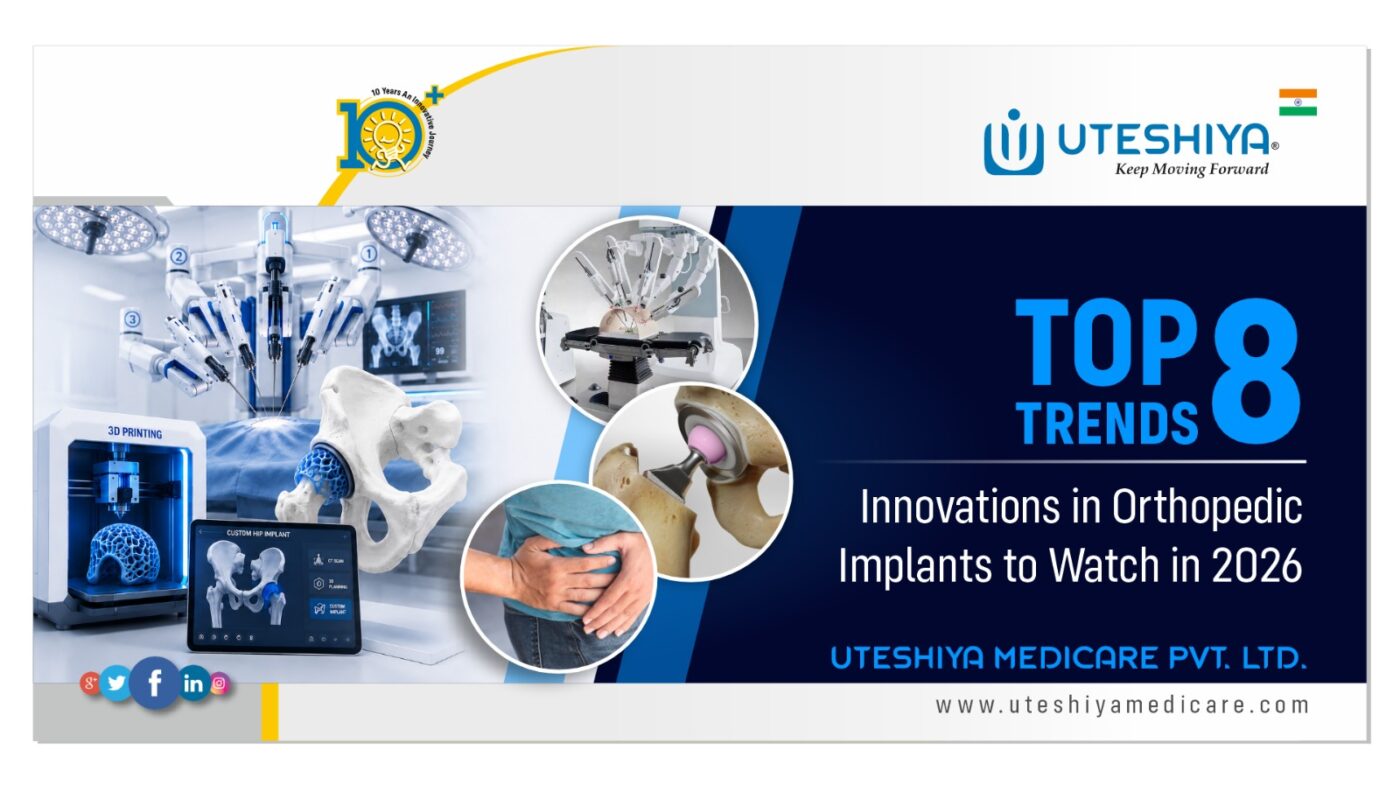
Orthopedic implants have come a long way from being standard devices used only to restore damaged bones and joints. Today, they are designed with greater precision, are more durable, and better suited to individual patient needs. New technologies are helping surgeons plan procedures with greater accuracy, while manufacturers are developing implants that support faster healing and improved long-term performance.
The international orthopedic implants market surpassed USD 26 billion in 2025 and is expected to grow steadily over the coming years. Increasing cases of osteoarthritis and sports injuries, along with an aging population, are driving demand for advanced orthopedic solutions. In 2026, the focus is shifting beyond stronger implants toward personalized treatment, digital surgical planning, advanced biomaterials, and technologies that support better patient outcomes.
What’s Driving Innovation in Orthopedic Implants in 2026?
Advances in digital technology, material science, and personalized treatment are changing how orthopedic implants are designed and used. These innovations are helping improve surgical precision, implant performance, and patient recovery with a wide range of orthopedic procedures.
1. Rise of Personalized Implants
Every patient has unique anatomy, which is why a one-size-fits-all approach is becoming less common for complex orthopedic procedures. Advances in medical imaging, computer-aided design, and manufacturing now allow implants to be tailored to an individual’s bone structure.
Patient-specific implants are created using CT or MRI scans that generate a detailed three-dimensional model of the affected area. This enables surgeons to select or manufacture implants that closely match the patient’s anatomy before surgery begins.
The approach is particularly valuable in revision surgeries, orthopedic oncology, severe trauma, and spinal reconstruction. A better implant fit can improve alignment, reduce the need for adjustments during surgery, and preserve healthy bone. As production becomes faster and more cost-effective, customized implants are expected to play a larger role in routine orthopedic care.
2. Growth of 3D-Printed Implants
3D printing has become much more than a manufacturing technique. In 2026, its biggest contribution is the production of porous titanium implants designed to encourage natural bone growth.
Unlike solid implant surfaces, porous structures allow bone tissue to grow into the implant. This biological fixation can improve stability over time and strengthen the connection between the implant and surrounding bone.
The technology also enables manufacturers to create complex implant designs for patients with irregular bone defects or those requiring customized reconstruction.
Beyond implants, 3D printing is widely used to produce surgical guides and anatomical models, helping surgeons plan complex procedures more accurately.
3. AI-Powered Surgical Planning
AI-powered software can analyze diagnostic images, measure anatomical structures, recommend implant sizes, and identify potential challenges before surgery.
This allows surgeons to evaluate different treatment options more efficiently and prepare for complex procedures with greater confidence. AI also helps standardize planning by reducing manual measurements and improving consistency across cases.
Beyond surgery, AI is beginning to support postoperative care by analyzing recovery patterns and identifying patients who may benefit from additional rehabilitation or closer monitoring. As these tools continue to improve, they are expected to become a routine part of orthopedic workflows across hospitals and specialty clinics.
4. Expansion of Robotic Surgery
Robot-assisted surgery is now widely used in many orthopedic centers, especially for hip and knee replacement procedures. These systems use detailed preoperative imaging to create a personalized surgical plan before the procedure begins.
During surgery, robotic systems assist with bone preparation and implant positioning while the surgeon remains in full control. This improves implant alignment and supports better joint function.
As robotic technology becomes more accessible, its use is expanding beyond joint replacements to selected spine and trauma procedures, making orthopedic surgeries more precise and efficient.
5. Smart Implants for Better Recovery
Orthopedic implants are now being designed with small sensors that can gather real-time data after surgery. These smart implants can monitor joint movement, implant loading, temperature changes, and other performance indicators during recovery.
Instead of depending only on scheduled follow-up visits, surgeons can use this information to track a patient’s progress and identify potential concerns earlier. This may allow timely intervention before minor issues develop into more serious complications.
Although sensor-enabled implants are still being introduced in select orthopedic procedures, continued research and technological advances are expected to make remote monitoring a more common component of postoperative care.
6. Bioactive & Antibacterial Coatings
Infection remains one of the most challenging complications after orthopedic surgery. To address this, manufacturers are developing implant coatings that not only protect against bacteria but also encourage stronger bone attachment.
Silver-based coatings, antibiotic-releasing surfaces, and bioactive materials are receiving significant attention in orthopedic research. These surface technologies are designed to reduce bacterial growth while creating an environment that supports bone healing around the implant.
As research continues, these coatings could improve implant longevity and lower the need for revision surgeries, particularly in high-risk patients or complex reconstruction cases.
7. Next-Generation Biomaterials
Manufacturers are introducing improved titanium alloys, advanced ceramics, and highly cross-linked polyethylene that offer better durability and wear resistance.
Researchers are also focusing on surface engineering techniques that improve osseointegration, the natural process through which bone bonds with an implant. Better surface properties can increase implant stability while reducing stress on surrounding bone.
These improvements aim to extend implant lifespan, particularly for younger and more active patients who may place greater demands on joint replacements over many years.
8. Mixed Reality in Orthopedic Surgery
Three-dimensional imaging software allows surgeons to study a patient’s anatomy in detail, determine implant positioning, and anticipate potential challenges before entering the operating room.
Mixed reality and augmented reality technologies are now adding another level of visualization.
By projecting digital anatomical information during surgery, these systems help surgeons maintain orientation during complex procedures involving the spine, pelvis, and joint reconstruction.
Although these technologies are still expanding across healthcare systems, they are expected to become more common as hospitals invest in digital operating rooms and image-guided surgical platforms.
Wrapping It Up
Orthopedic implant innovations are helping surgeons achieve greater precision while supporting better recovery and long-term implant performance. As research and technology advance, orthopedic care is expected to become more efficient, making high-quality treatment accessible to a wider range of patients.
