
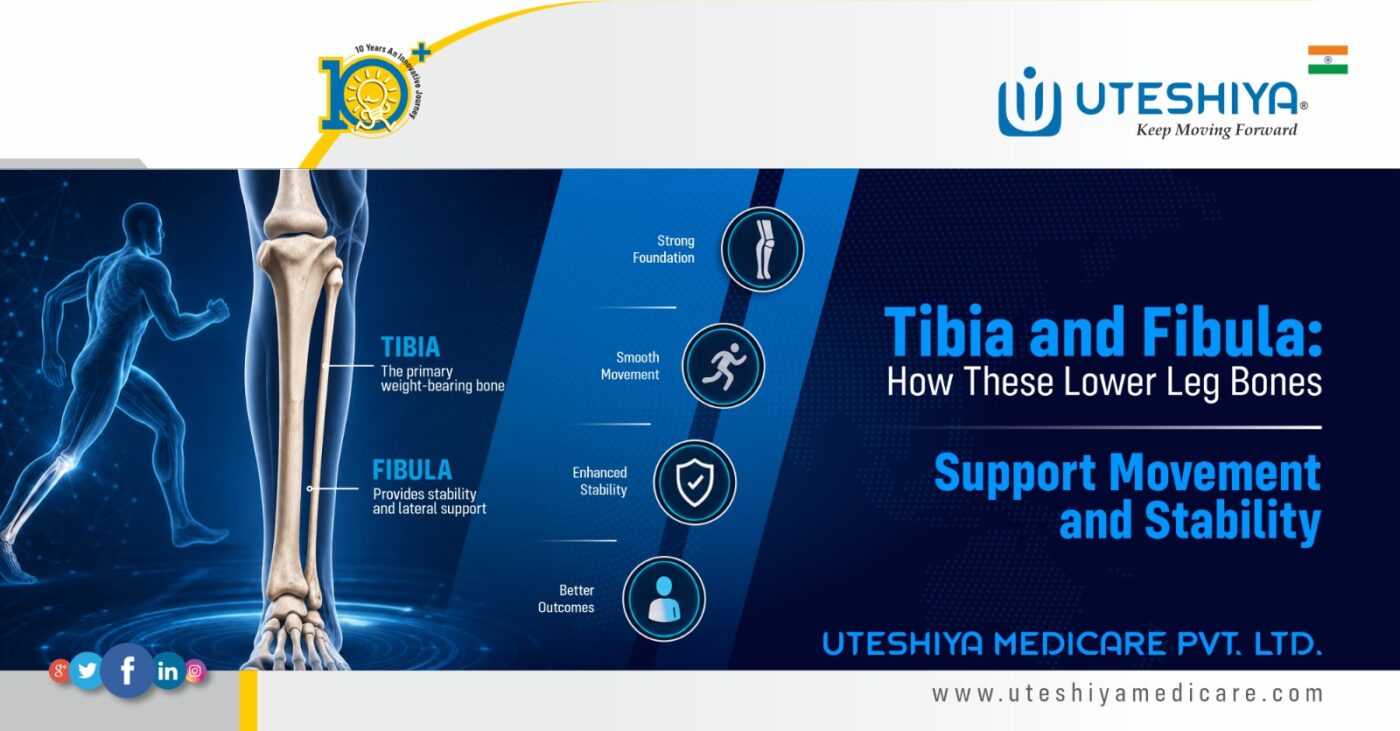
Have you ever wondered why a simple leg injury can make standing, walking, or even balancing so difficult? The answer often lies in two long bones in your lower leg—the tibia and fibula. Although they sit side by side, each has a different role in supporting your body and allowing smooth movement.
The tibia is the body’s second-longest bone and carries most of your body weight, while the fibula mainly supports ankle stability and provides attachment points for muscles and ligaments. Together, they form the framework of the lower leg and work with the knee, ankle, muscles, and connective tissues to make everyday activities possible.
Whether you’re walking, climbing stairs, playing sports, or simply standing still, these two bones are constantly at work. Understanding their structure and function can also help you recognize common injuries and know when you need medical attention.
What are the Tibia and Fibula?
The lower leg contains two parallel bones that extend from the knee to the ankle.
The tibia, commonly known as the shin bone, is positioned on the inner side of the leg. It is larger, stronger, and responsible for supporting most of the body’s weight. The tibia also forms part of both the knee and ankle joints, making it essential for movement and stability.
The fibula is the thinner bone located along the outer side of the lower leg. Unlike the tibia, it carries very little body weight. Instead, it strengthens the ankle, supports muscles, and helps maintain balance during movement.
Tibia and Fibula Comparison
| Feature | Tibia | Fibula |
| Position | Inner side of lower leg | Outer side of lower leg |
| Size | Larger and stronger | Slimmer and longer |
| Main Function | Supports body weight | Stabilizes the ankle and supports muscles |
| Forms Part of | Knee and ankle joints | Ankle joint |
| Weight Bearing | Yes | Minimal |
Although they have different functions, the tibia and fibula work as a team. They are connected by a strong sheet of tissue called the interosseous membrane, which helps distribute forces across the lower leg and keeps both bones aligned during movement.
Every time you take a step, jump, or change direction, the tibia absorbs most of the impact while the fibula helps stabilize the leg and ankle. This coordination allows smooth movement and reduces stress on surrounding joints.
Why Are the Tibia and Fibula Important?
These bones do much more than provide shape to the lower leg. Their combined functions are as below.
- Supporting body weight while standing and walking
- Maintaining balance during movement
- Forming stable knee and ankle joints
- Providing attachment points for muscles, tendons, and ligaments
- Helping absorb impact during running and jumping
Without healthy tibia and fibula bones, even routine activities such as walking across a room or climbing stairs would become challenging.
Common Conditions Affecting the Tibia and Fibula
Several medical conditions can affect these bones. Some develop after sudden injuries, while others result from repeated stress or underlying bone disorders.
Fractures
A fracture is one of the most common injuries involving the tibia or fibula. It may occur after road accidents, sports injuries, falls, or other high-impact trauma. Because the tibia bears most of the body’s weight, fractures often require careful treatment and rehabilitation.
Stress Fractures
Repeated activities such as long-distance running, military training, or intense sports can cause tiny cracks in the bone known as stress fractures. These injuries usually develop gradually rather than after a single accident.
Shin Splints
Pain along the front of the lower leg is commonly called shin splints. This condition often affects runners or people who suddenly increase their exercise intensity. While it doesn’t involve a broken bone, ignoring the symptoms may increase the risk of a stress fracture.
Bone Weakness
Conditions such as osteoporosis can reduce bone density, increasing the likelihood of fractures even after relatively minor falls.
Symptoms That May Indicate a Problem
Lower leg injuries don’t always look serious at first. However, certain symptoms should never be ignored.
- Persistent pain in the shin or outer lower leg
- Swelling around the injury
- Bruising or tenderness
- Difficulty putting weight on the affected leg
- Limited movement of the ankle or knee
- Visible deformity after an accident
If any of these symptoms occur after an injury, medical evaluation is recommended, as early treatment can improve recovery.
How Doctors Diagnose Tibia and Fibula Injuries
Diagnosis usually begins with a physical examination. Your doctor will ask how the injury happened, examine the affected area, and assess movement, swelling, and tenderness.
Imaging tests help confirm the diagnosis and determine the severity of the injury.vCommon investigations are mentioned here.
- X-rays to detect fractures
- CT scans for complex bone injuries
- MRI scans to identify stress fractures or soft tissue damage
- Bone scans in selected cases where fractures are difficult to detect
These tests help guide the most appropriate treatment plan.
Treatment Options
Treatment depends on the type and severity of the injury.
Minor injuries may improve with rest, ice application, compression, elevation, and temporary activity modification.
Stable fractures often require a cast or protective brace to allow the bone to heal naturally.
More complex fractures may need surgery to restore proper alignment. Orthopedic surgeons may use metal plates, screws, or intramedullary rods to stabilize the bone until healing is complete.
Physiotherapy is frequently recommended after immobilization or surgery to restore strength, flexibility, and normal walking.
Recovery After a Tibia or Fibula Injury
Healing time varies depending on many factors such as,
- Type of injury
- Patient’s age
- Overall health
- Bone quality
- Whether surgery was required
Simple fractures may heal within a few months, while severe injuries can take considerably longer and require structured rehabilitation.
Returning to sports or physically demanding work should only happen after medical clearance to reduce the risk of re-injury.
Tips to Keep Your Lower Leg Bones Healthy
Healthy bones are easier to protect than injured ones to repair. Some practical habits such as,
- Eat foods rich in calcium and vitamin D.
- Stay physically active with weight-bearing exercise.
- Wear supportive footwear during sports and daily activities.
- Increase exercise intensity gradually.
- Maintain a healthy body weight.
- Avoid smoking, as it can slow bone healing.
- Use appropriate protective equipment during high-risk activities.
These habits support stronger bones and lower the risk of injuries over time.
Wrapping It Up
The tibia and fibula form the foundation of your lower leg and play an essential role in movement, balance, and stability. While the tibia supports most of your body weight, the fibula strengthens the ankle and provides support for surrounding muscles and ligaments. Because these bones are involved in nearly every step you take, injuries can significantly affect daily life. Understanding their functions, recognizing early symptoms, and seeking timely medical care can help protect your mobility and support a smoother recovery if an injury occurs.
