
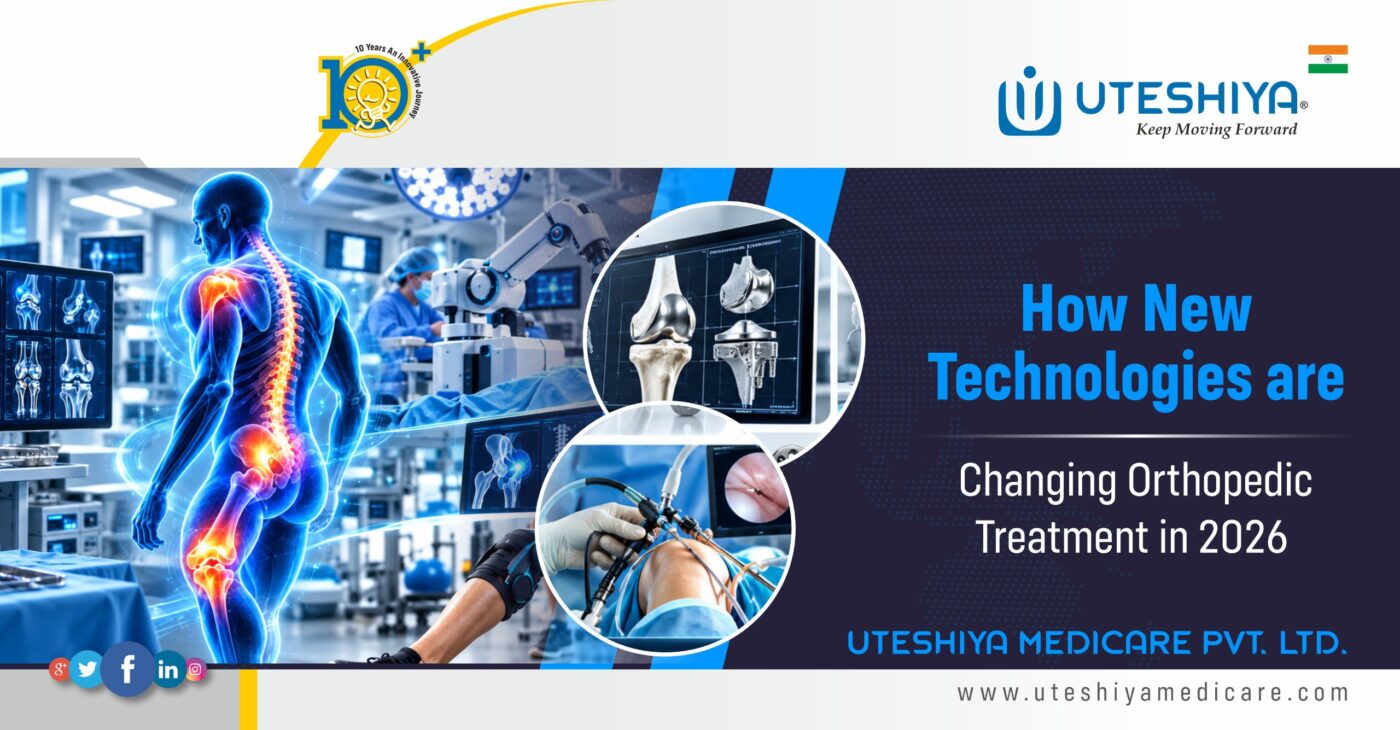
Treating a complex fracture or replacing a damaged joint can be difficult when standard implants do not fit a patient’s anatomy. New medical technologies are giving orthopedic surgeons more options for planning procedures, selecting implants, and monitoring recovery. In 2026, artificial intelligence, robotic-assisted surgery, patient-specific implants, and smart monitoring devices are gaining attention for their potential to improve surgical planning and patient care.
The need for better orthopedic care is substantial. According to the World Health Organization, around 1.71 billion people worldwide were living with musculoskeletal conditions, based on estimates from 2019. These conditions affect bones, joints, muscles, and connective tissues, and many patients need treatment or rehabilitation to regain mobility. New medical technologies can help doctors plan complex procedures and monitor recovery, but their value depends on clinical evidence, patient needs, and safe use.
New Technologies Improving Orthopaedic Care
1. AI Helps Surgeons Plan Operations
Artificial intelligence can analyze X-rays, CT scans, and MRI images to help doctors assess bone structure and identify abnormalities. AI-assisted planning software can also help surgeons review implant position and prepare for complex procedures before surgery.
These tools can save time during image assessment and support surgical planning. However, results must be checked by qualified clinicians because AI can miss findings or produce incorrect results.
2. Robotic Surgery Supports Accurate Implant Placement
Robotic-assisted systems help surgeons plan joint replacement procedures and guide bone preparation. During knee or hip replacement, some systems provide feedback that helps the surgeon follow the planned implant position and alignment.
The surgeon remains in control of the operation. Robotic assistance does not guarantee better outcomes for every patient, and the benefits depend on the procedure, the surgeon’s experience, and the patient’s condition.
3. Patient-Specific Implants Fit Complex Bone Defects
Standard implants suit many patients, but severe bone loss, unusual anatomy, or previous surgery can make reconstruction more difficult. Patient-specific implants are designed using medical images to match an individual’s anatomy.
Additive manufacturing, commonly called 3D printing, can produce complex implant shapes and porous structures that support fixation. These implants are used in selected cases involving complex joint reconstruction, spinal procedures, and bone defects. Their design, strength, material quality, and long-term performance must be carefully assessed before clinical use.
4. Smart Devices Help Monitor Recovery
Recovery continues after a patient leaves the hospital. Wearable sensors and smart implants are being developed to collect information about movement, activity, and loading during rehabilitation.
This information may help clinicians assess progress between appointments and identify changes that need further evaluation. However, sensor readings cannot diagnose complications on their own. Data accuracy, privacy, cost, and the clinical usefulness of the measurements remain important considerations.
5. Bioresorbable Implants Support Temporary Fixation
Some fractures and orthopaedic conditions need support only while the bone heals. Bioresorbable implants, made from materials designed to break down in the borthopedicve this purpose in selected applications.
Certain absorbable screws and pins are used in specific procedures. Their suitability depends on the required strength, healing period, degradation rate, and tissue response. They are not appropriate for every fracture, and conventional metal implants remain necessary in many cases.
6. Augmented Reality Helps Surgeons See Anatomy During Surgery
Augmented reality (AR) can place digital images or surgical guidance over a view of the patient. In orthopaedics, this technology is being studied for procedures involving the spine, joints, and complex bone structures. Surgeons may use it to view planned screw positions or anatomical details without repeatedly looking away from the operating area.
A 2026 systematic review of clinically tested AR navigation found potential benefits in surgical accuracy, but the evidence varied across procedures. Registration errors, headset comfort, and integration into operating room routines remain challenges. AR is a support tool, not a replacement for surgical judgment.
7. Computer-Assisted Fracture Treatment Improves Planning
Complex fractures can leave bones displaced or broken into several pieces. CT-based planning and computer-assisted navigation help surgeons examine the fracture pattern and plan how bone fragments should be positioned and fixed.
These tools can be useful when a fracture is close to a joint or involves a difficult anatomical area. During surgery, navigation systems may help guide instruments and the placement of screws. The surgeon still needs to assess bone quality, surrounding tissues, and the stability of the repair. The benefit depends on the fracture type and the accuracy of the available imaging.
8. Digital Rehabilitation Tracks Movement After Surgery
Physiotherapy is a major part of recovery after joint replacement, fracture fixation, and ligament repair. Digital rehabilitation tools use mobile applications, movement sensors, and video sessions to help patients follow exercise plans at home.
Some systems record joint movement or activity levels and share progress with the treating team. This can help clinicians adjust exercises between clinic visits, especially when patients have difficulty attending frequent appointments.
Digital programs cannot replace every in-person assessment. Patients may perform exercises incorrectly or experience pain that requires a physical examination. These tools work best when the treatment plan includes clear instructions and regular clinical review.
9. Regenerative Treatments Aim to Support Tissue Repair
Orthopaedic research also examines treatments designed to support the repair of cartilage, bone, tendons, and ligaments. Approaches under study include cell-based therapies, biological materials, and tissue-engineering methods.
Some biological treatments already have specific clinical uses, while others remain experimental or have limited evidence for particular orthopedic conditions. Results can vary by treatment method, injury, and patient. Doctors must assess the evidence and regulatory status before recommending these options. A treatment described as regenerative should not automatically be assumed to restore damaged tissue or prevent surgery.
What Hospitals Must Consider Before Adopting These Technologies
New technology needs to solve a clinical problem, not just introduce a different way of working. Hospitals must assess clinical evidence, safety, cost, staff training, and compatibility with existing equipment.
Manufacturers also need to test devices for their intended use and maintain consistent quality during production. Long-term evidence on complications, mobility, implant survival, and patient satisfaction helps determine whether a technology offers meaningful benefits.
Wrapping It Up
AI-assisted planning, robotic surgery, patient-specific implants, smart monitoring, and bioresorbable materials are expanding treatment options in orthopaedics. Some are already used in selected procedures, while others need more clinical evidence. Their value depends on safe design, suitable patient selection, surgical expertise, and measurable improvements in patient care.
