
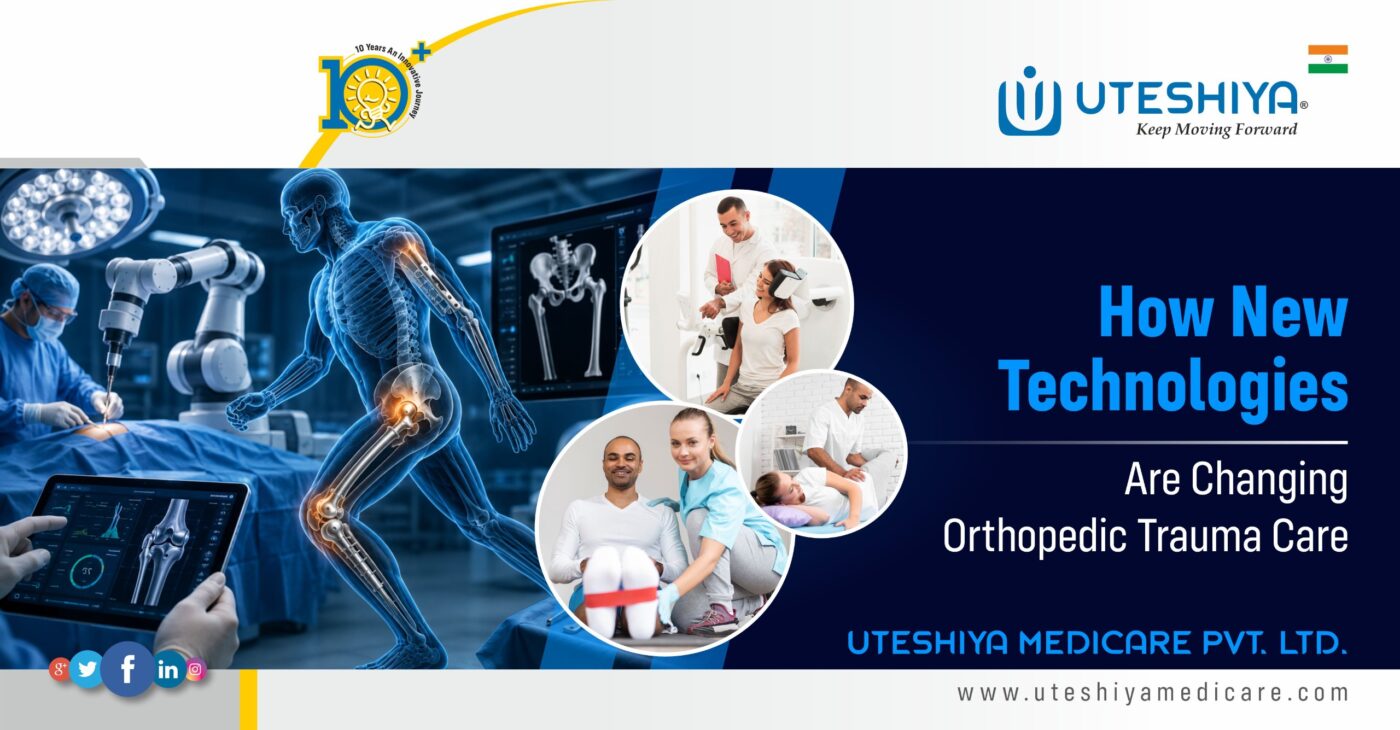
A complex fracture can leave the bone in several pieces, change the normal shape of a joint, or affect nearby nerves and blood vessels. In such cases, treatment depends on how well the injury is understood before surgery and how accurately the repair is performed. X-rays and CT scans remain central to fracture care, but newer tools give doctors more ways to study an injury before they make treatment decisions.
Robotic systems, computer-assisted image review, patient-specific surgical guides, biological testing, and digital tools for recovery are being studied in orthopedic trauma. These methods do not remove the need for a surgeon.
They are mainly used to provide measurements, assist with planning, and help doctors follow patients after treatment. Recent research also shows that most work in this area is still based on retrospective studies, so more clinical testing is needed before many of these tools can be used widely.
New Tools for Difficult Fractures
New imaging methods and computer-based tools are being used to give doctors more information about complex injuries. They can help with understanding the fracture, planning treatment, and checking important details before surgery.
- Better Images Before Surgery
A difficult fracture can be hard to understand from a standard X-ray alone. CT scans can show the position of bone fragments in greater detail and help doctors assess the fracture from different views.
Computer-based image systems are being developed to assist with fracture detection and classification. They may help doctors:
- Spot a suspected fracture on an image.
- Check the position of broken bone fragments.
- Sort fractures based on their type or location.
- Measure certain parts of the bone before treatment.
These tools can be useful when an image needs a closer look, but the doctor still has to consider the patient’s symptoms, physical examination, and complete medical history before deciding on treatment.
- More Accurate Planning and Implant Placement
Surgery for a difficult fracture can involve plates, screws, nails, or other fixation devices. The surgeon needs to decide where these implants should go while avoiding important nerves, blood vessels, and joint surfaces.
Computer-assisted navigation can provide information about the position of surgical instruments during the procedure. Robotic systems can also assist with planned movements and implant placement.
A 2026 review covering navigation, robotics, and augmented reality in orthopedic surgery found that these systems generally improved implant positioning and surgical accuracy, although long-term differences in patient outcomes were less consistent. Cost, training, and fitting these systems into normal operating-room work remain concerns.
This makes robotic assistance more useful for selected cases rather than something that needs to be used for every fracture.
- Patient-Specific Planning
Some fractures have such unusual shapes that standard surgical planning may not provide enough detail. Doctors can use CT data to build a digital model of the patient’s bone and study the injury before surgery.
Patient-specific surgical guides are another area of interest. These guides are made to fit a particular patient’s anatomy and can help with the planned position of cuts, screws, or implants.
They may help surgeons such as,
- Study the fracture shape before surgery.
- Plan the position of screws, plates, or other implants.
- Prepare for difficult areas where the normal bone structure has changed.
- Check the planned procedure before the operation begins.
Reviews have reported their use in pelvic, spinal, upper-limb, and lower-limb procedures. Some studies have reported shorter operating times, less blood loss, and better fracture reduction, although the strength of evidence differs between procedures.
A 2025 systematic review of patient-specific guides found that the available clinical evidence was still limited, which means these tools need further comparison with standard methods before firm conclusions can be made about their overall benefit.
Treatment Based on the Patient
Treatment is not based only on the fracture. A patient’s general health, bone condition, and medical history can also affect the choice of treatment and expected recovery.
- Patient Health and Fracture Treatment
Two people can have similar fractures but very different health conditions. Age, bone quality, previous injuries, other diseases, and the severity of the trauma can all affect healing.
Precision medicine in orthopedic trauma focuses on these differences. Instead of looking only at the fracture, doctors can also consider patient data that may affect treatment and recovery.
Researchers are studying blood markers and other biological information that may help identify inflammation, injury severity, or a higher chance of complications. Most of these methods are still being investigated, and they are not yet part of routine fracture treatment.
Computer models are also being tested to estimate the risk of complications and poor outcomes. A recent review found that outcome prediction is a major area of orthopedic trauma research, but most published studies have not yet been tested prospectively in everyday clinical care.
This is why such results should be treated as supporting information rather than a final treatment decision.
- After the Fracture Has Been Fixed
Surgery is only one part of trauma care. Patients may need weeks or months of rehabilitation after the bone has been repaired.
Wearable devices can record walking, movement, or exercise during recovery. This information may help doctors and physiotherapists see how a patient is progressing between appointments.
Digital motion tracking can also help measure movement during rehabilitation. Instead of depending only on what happens during a clinic visit, healthcare professionals may be able to review information collected at home.
These tools may be useful for patients who need regular follow-up, but the information still needs to be interpreted properly. Pain, weakness, balance, swelling, and other symptoms cannot always be measured through a device alone.
What Still Needs to Be Solved
New technology can be helpful, but several practical issues still need attention. Hospitals need to consider the following.
- How accurately the system works with different patients and imaging equipment.
- Whether staff can use the technology without adding extra steps.
- The cost of equipment, software, maintenance, and training.
- How patient records and medical images will be kept secure.
This keeps the article easy to read while adding useful information without making the section too long.
Wrapping It Up
New tools are giving orthopedic teams more information when dealing with difficult fractures and recovery. Robotics, detailed imaging, patient-specific planning, and other methods can be useful in selected cases. Their use will depend on how well they work in real hospitals, how easy they are to use, and whether they provide a clear benefit to patients. Doctors will remain responsible for deciding the right treatment for each case.
