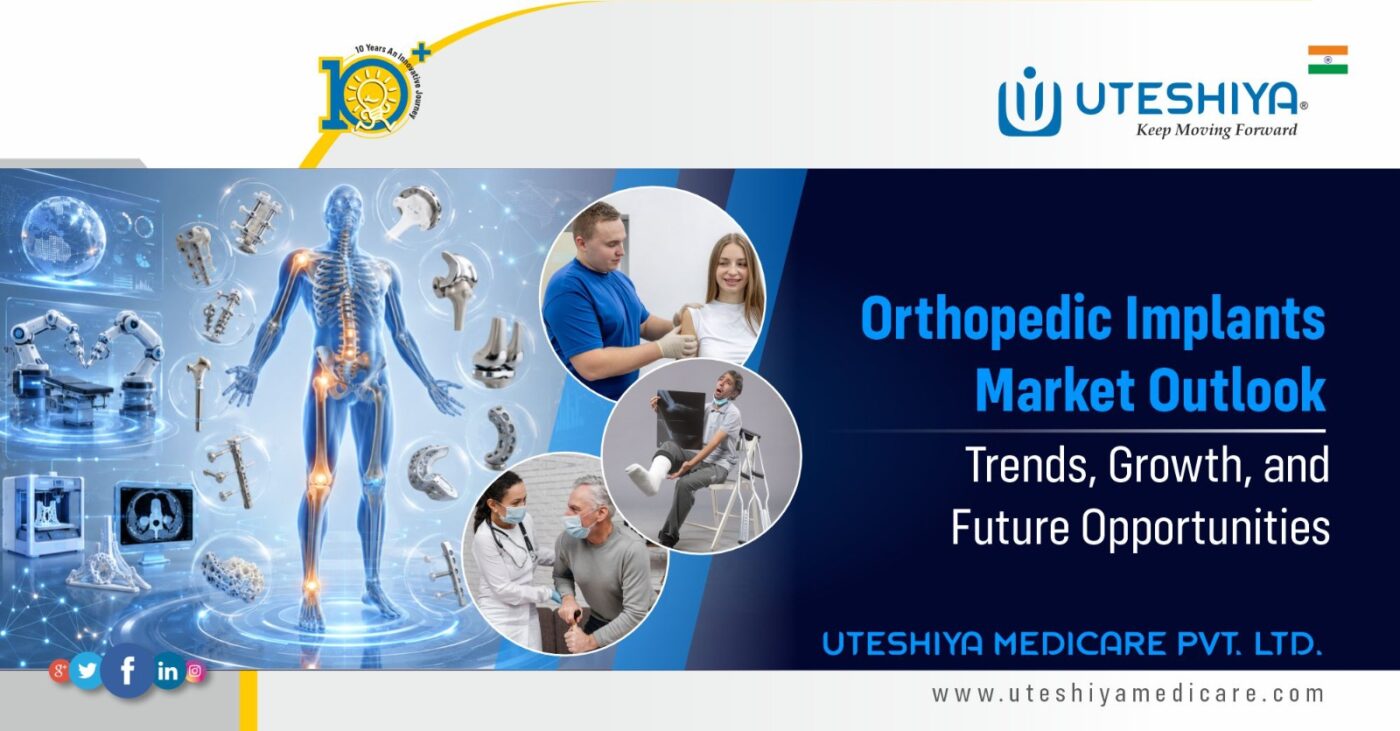
The orthopedic implants market continues to expand as healthcare systems invest in advanced surgical technologies and personalized treatment approaches. Increasing cases of osteoarthritis, osteoporosis, sports injuries, spinal disorders, and trauma are increasing the demand for reliable implant solutions across hospitals and specialty orthopedic centers. According to recent market estimates, the international orthopedic implants market was valued at USD 27.5 billion in 2024 and is projected to grow from USD 28.52 billion in 2025 to USD 38.14 billion by 2033, at a CAGR of 3.7%.
Along with the growing number of joint replacement procedures, advances in implant materials, robotic-assisted surgery, digital planning, and patient-specific implants are changing the way orthopedic care is delivered. These developments are creating new opportunities for manufacturers, healthcare providers, and patients worldwide.
What Is Supporting the Growth of the Orthopedic Implants Market?
The demand for orthopedic implants continues to increase due to demographic changes, technological advancements, and improved access to healthcare. More patients are choosing surgical treatment as implant designs become more durable and recovery pathways continue to improve. Several factors are contributing to the steady expansion of the market.
Growing Aging Population
People are living longer than ever before, increasing the prevalence of degenerative joint diseases such as osteoarthritis and osteoporosis. As mobility becomes a priority for older adults, the demand for hip, knee, shoulder, and spinal implants continues to rise.
Increasing Orthopedic Injuries
Road accidents, sports injuries, workplace trauma, and fractures continue to generate significant demand for orthopedic procedures. Complex trauma cases often require specialized implant systems that restore stability while supporting long-term recovery.
Continuous Technology Advancements
Manufacturers are introducing stronger biomaterials, porous titanium implants, highly cross-linked polyethylene, and customized implant solutions that improve implant performance and biological fixation. Digital surgical planning and robotic-assisted procedures are also contributing to greater surgical precision.
Market Overview
The orthopedic implants market includes a broad range of products designed to restore joint function, stabilize fractures, and reconstruct damaged bones. Joint reconstruction implants continue to account for the largest share of the market due to the growing number of hip and knee replacement procedures performed globally.
Spinal implants, trauma fixation devices, extremity implants, and patient-specific reconstruction systems are also experiencing steady growth as healthcare providers adopt more advanced surgical techniques and personalized treatment approaches.
Market Segmentation
The orthopedic implants market is expanding across multiple product categories, materials, and surgical procedures.
- By Product Type
Joint reconstruction implants remain the largest segment, supported by increasing hip and knee replacement surgeries worldwide. Trauma fixation devices, spinal implants, dental implants, and extremity reconstruction systems also contribute significantly to overall market demand.
- By Material
Metallic implants, particularly titanium and cobalt-chromium alloys, continue to dominate the market because of their strength, durability, and biocompatibility. Ceramic materials and advanced polymers are gaining wider acceptance for applications requiring improved wear resistance and bone compatibility.
- By Surgical Procedure
Open orthopedic surgery continues to account for a major share of implant procedures. However, minimally invasive surgery is expanding steadily as hospitals increasingly adopt techniques that reduce hospital stays, minimize tissue damage, and support faster patient recovery.
Regional Analysis
North America Leads the Global Market
North America remains the largest regional market due to its advanced healthcare infrastructure, high procedure volumes, strong reimbursement systems, and the presence of leading medical device manufacturers. The region also benefits from early adoption of robotic-assisted surgery, digital planning, and innovative implant technologies.
Asia-Pacific Continues to Expand
Asia-Pacific is expected to experience significant growth throughout the forecast period. Countries such as India, China, Japan, and South Korea are investing heavily in healthcare infrastructure while improving access to orthopedic care. Rising healthcare spending, aging populations, and greater awareness of joint replacement procedures continue to support market expansion.
Europe Maintains Stable Growth
European countries continue to invest in orthopedic innovation, particularly in joint replacement, spinal surgery, and trauma reconstruction. An aging population and well-established healthcare systems are supporting consistent demand across the region.
Where the Orthopedic Implants Market Is Heading
The orthopedic implants industry continues to evolve as manufacturers invest in technologies that improve surgical precision and patient outcomes. Beyond traditional implant systems, companies are developing solutions that address complex reconstruction procedures while supporting faster recovery and long-term implant performance. Several factors are creating new growth opportunities.
- Growing adoption of patient-specific implants for complex orthopedic cases.
- Increasing use of robotic-assisted and computer-guided surgery.
- Expansion of minimally invasive orthopedic procedures.
- Greater demand for 3D-printed implants and porous titanium technologies.
- Rising investment in emerging healthcare markets across Asia-Pacific, Latin America, and the Middle East.
These developments are creating new opportunities for manufacturers to introduce advanced implant systems that meet the changing needs of surgeons and healthcare providers.
Factors Influencing Market Development
Although the market continues to grow steadily, several factors influence the pace of adoption across different regions.
High treatment costs remain a challenge in developing economies where access to advanced orthopedic procedures is still limited. In addition, strict regulatory approval requirements often increase the time needed to introduce new implant technologies.
The shortage of experienced orthopedic surgeons in some regions and the risk of implant-related complications, such as infection or revision surgery, continue to encourage manufacturers to focus on product innovation, improved implant materials, and enhanced surgical planning.
What Lies Ahead for the Orthopedic Implants Industry
The orthopedic implants market is expected to remain one of the fastest-growing segments of the medical device industry over the coming years. Continued investment in biomaterials, additive manufacturing, digital planning, and artificial intelligence is improving both implant design and surgical workflows.
Manufacturers are also placing greater emphasis on personalized orthopedic solutions that match each patient’s anatomy, particularly for complex trauma, spinal reconstruction, revision joint replacement, and orthopedic oncology. These innovations are expected to improve clinical outcomes while supporting more efficient surgical procedures.
As healthcare infrastructure expands worldwide and orthopedic technologies continue to advance, the market is likely to create new opportunities for manufacturers, hospitals, and healthcare professionals.
Wrapping It Up
The orthopedic implants market is moving forward with steady growth, supported by continuous improvements in surgical techniques, implant technology, and patient care. As healthcare systems focus on delivering better clinical outcomes, the demand for high-quality and personalized implant solutions is expected to increase. With ongoing innovation and wider access to advanced orthopedic treatments, the industry is well-positioned to meet the evolving needs of both surgeons and patients in the years ahead.
