
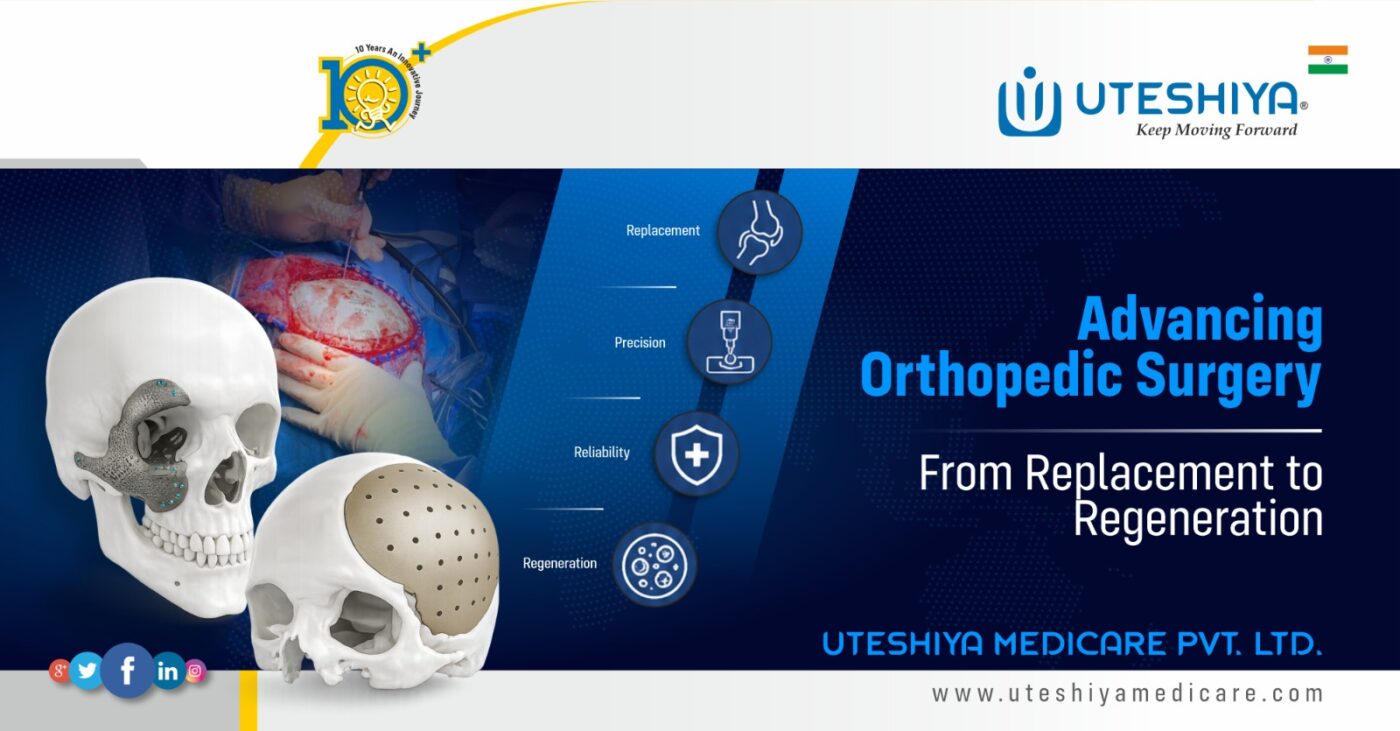
Not every orthopedic condition can be treated with a standard implant. Patients with severe bone loss, musculoskeletal tumors, failed joint replacements, or skeletal deformities often require patient-specific solutions designed to address their unique clinical needs. Today, surgeons are increasingly managing complex conditions such as severe bone loss, musculoskeletal tumors, failed joint replacements, skeletal deformities, and cartilage defects. In many of these cases, conventional implants and standard surgical techniques may not provide the best long-term solution.
Advances in patient-specific implants, precision surgical planning, and regenerative technologies are changing this approach. Instead of relying solely on standard implants, surgeons can now use customized reconstruction solutions designed around each patient’s anatomy. This shift is helping improve surgical precision, preserve healthy bone, and support better long-term recovery.
Why Complex Orthopedic Cases Need a Personalized Approach
Every orthopedic condition presents unique challenges. The size of a bone defect, the patient’s anatomy, previous surgeries, and the quality of surrounding bone all influence treatment decisions. While conventional implants remain effective for routine procedures, more complex cases often require customized reconstruction to achieve the best possible outcome.
Patient-specific orthopedic solutions combine advanced imaging, digital planning, and customized implants to create treatments that closely match individual anatomical requirements. This approach helps surgeons manage difficult procedures with greater confidence while improving implant fit and overall surgical accuracy.
Advanced Patient-Specific Solutions for Complex Orthopedic Conditions
Modern orthopedic reconstruction encompasses a wide range of personalized treatment options tailored to challenging clinical situations.
- Reconstructive Surgery with Porous Titanium Implants
Porous titanium implants have become an important solution for patients with significant bone defects. Their porous structure encourages natural bone growth into the implant, creating stronger biological fixation while improving long-term stability.
These implants are particularly valuable in complex reconstructive procedures where conventional implants may not provide adequate support.
- Musculoskeletal Tumor Reconstruction
Orthopedic tumor surgery often requires the removal of diseased bone while preserving as much healthy tissue as possible. Customized implants allow surgeons to reconstruct complex skeletal defects more accurately after tumor removal.
Patient-specific reconstruction helps restore stability, supports mobility, and improves functional recovery following extensive bone resection.
- Complex Revision Joint Surgery
Revision procedures are generally more challenging than primary joint replacements due to implant loosening, bone loss, or anatomical changes resulting from prior surgeries.
Customized implants provide improved implant fit while reducing the need for extensive adjustments during surgery. This supports better joint alignment and contributes to more predictable surgical outcomes.
- Skeletal Deformity Correction
Correcting congenital deformities or trauma-related skeletal abnormalities requires careful planning and high surgical precision.
Using three-dimensional imaging and patient-specific surgical guides, surgeons can accurately restore alignment while preserving healthy bone and improving long-term function.
- Bone Allograft Reconstruction
Patients with extensive bone loss may require reconstruction using donor bone tissue. Precision cutting guides help surgeons prepare both the patient’s bone and the allograft with greater accuracy, creating a better fit between the reconstructed sections and improving surgical efficiency.
- Precision Planning Before Surgery
Successful orthopedic reconstruction begins well before the patient enters the operating room. Modern imaging technologies, such as CT and MRI scans, allow surgeons to create detailed three-dimensional models of the affected anatomy before surgery.
Digital surgical planning enables evaluation of implant positioning, anticipation of challenges, and development of patient-specific surgical guides to improve accuracy during complex procedures. Better planning not only supports surgical precision but also reduces operating time and improves overall workflow.
From Replacement to Regeneration
Modern orthopedic care is moving beyond simply replacing damaged bones and joints. The focus is gradually shifting toward preserving healthy tissue and supporting the body’s natural healing process whenever possible.
Technologies such as porous titanium implants, advanced biomaterials, and regenerative reconstruction techniques promote stronger bone integration and restore structural stability. Rather than acting only as mechanical replacements, these solutions work alongside the body’s biological healing process to improve long-term outcomes.
This regenerative approach is especially valuable for patients with severe trauma, large bone defects, orthopedic tumors, and osteochondral injuries, where restoring healthy bone and joint function is equally as important as replacing damaged tissue.
Applications in Complex Trauma Surgery
Trauma surgery often involves injuries that extend beyond simple fractures. High-energy accidents can result in severe bone loss, joint damage, and extensive soft tissue injuries that require specialized reconstruction.
Patient-specific implants allow surgeons to rebuild damaged skeletal structures more accurately while restoring stability and function. Advanced reconstruction techniques are also being used to treat large osteochondral defects that affect both bone and cartilage, helping to preserve joint function and improve long-term mobility.
Benefits of Patient-Specific Orthopedic Reconstruction
Personalized orthopedic solutions offer several advantages for surgeons and patients alike-
- Improved implant fit based on individual anatomy.
- Greater surgical precision through digital planning.
- Better preservation of healthy bone tissue.
- Stronger biological fixation with porous implant technology.
- Reduced need for intraoperative implant modifications.
- Improved recovery and long-term functional outcomes.
Key Considerations When Planning Complex Orthopedic Reconstruction
Successful orthopedic reconstruction depends on much more than selecting the right implant. Every patient requires a detailed clinical evaluation to determine the most suitable treatment approach. Factors such as bone quality, defect size, previous surgeries, age, activity level, and overall health all influence surgical planning and implant selection.
A multidisciplinary approach is often required for complex orthopedic procedures. Orthopedic surgeons, radiologists, biomedical engineers, and rehabilitation specialists work together to develop a treatment plan that addresses both the structural problem and the patient’s long-term functional goals.
Some of the key considerations during treatment planning are listed below.
- Accurate diagnostic imaging to evaluate bone quality, anatomy, and the extent of damage.
- Patient-specific implant selection based on individual anatomical and clinical requirements.
- Preoperative digital planning to improve implant positioning and surgical precision.
- Bone preservation techniques are used to maintain as much healthy tissue as possible.
- Postoperative rehabilitation planning to support recovery and restore mobility.
Careful planning before surgery helps reduce unexpected challenges during the procedure while improving implant fit, surgical efficiency, and overall treatment outcomes. As patient-specific technologies continue to advance, orthopedic teams can develop more precise treatment strategies that support both immediate recovery and long-term joint function.
Wrapping It Up
Orthopedic and trauma surgery continues to move from standard implant replacement toward personalized reconstruction and regenerative treatment strategies. By combining patient-specific implants, precision surgical planning, advanced biomaterials, and innovative reconstruction techniques, surgeons can manage complex orthopedic conditions with greater accuracy and confidence.
As these technologies continue to advance, personalized orthopedic solutions will help improve patient care, restore mobility, and support long-term bone regeneration.
