
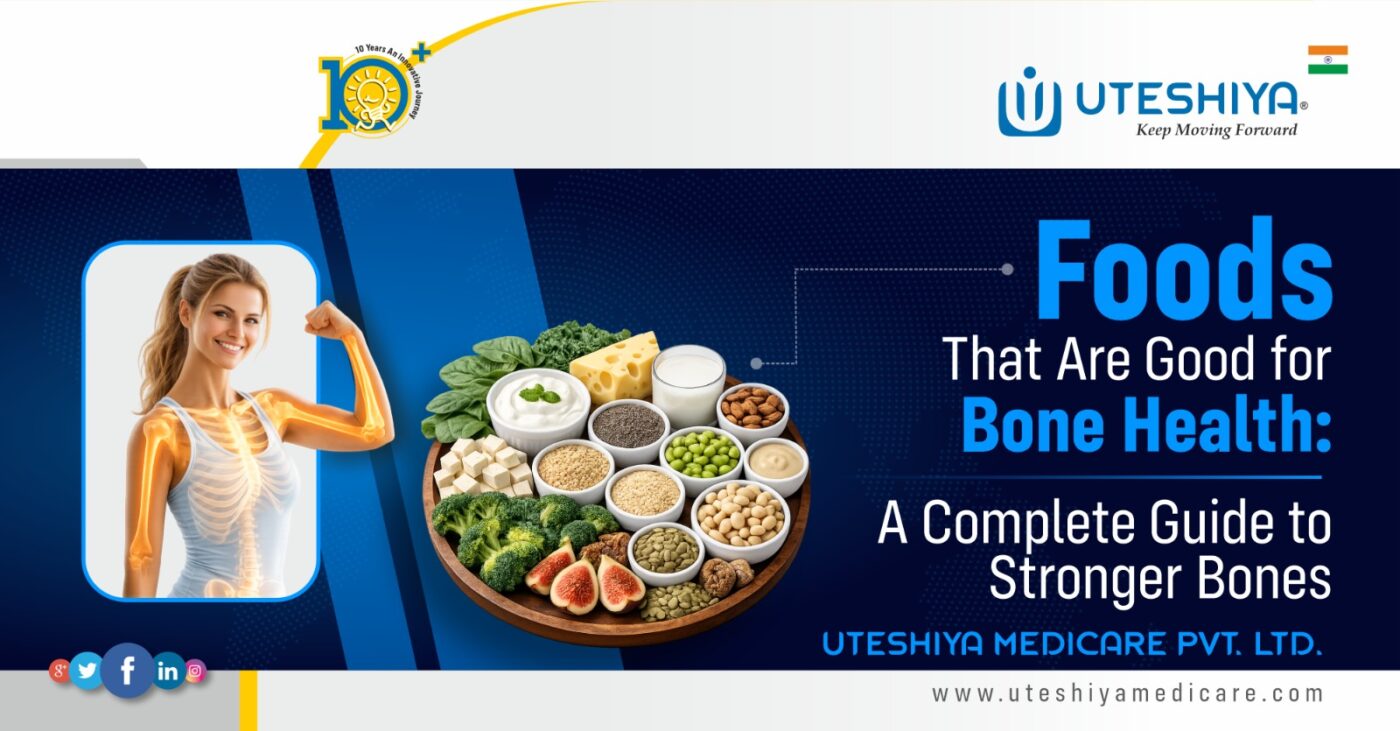
Strong bones are essential for everyone, not just kids. Adults of all ages need to take care of their bones to avoid breaks, joint pain, and long-term problems like osteoporosis. What you eat has a big effect on how strong your bones are. Up to 60–70% of your peak bone mass is affected by what you eat and drink, mainly from childhood to early adulthood, but it remains important throughout your life.
Recently released worldwide health reports show a concerning trend: one in 3 women and 1 in 5 men above the age of 50 will experience an osteoporosis-related fracture. Guess what? With good diet, you can avoid many of these problems. This blog post provides a straightforward, scientific analysis of the foods that promote healthy bones throughout a person’s life.
Why the Right Foods Matter for Your Bones
Even though bones look solid, they are actually living tissue that constantly breaks down and renews. For this process to work, it needs the right minerals. Your body takes calcium from your bones when you don’t get enough of specific vitamins and minerals in your food. This makes your bones weaker over time.
Essential foods for bone health are as mentioned here.
- Calcium
- Vitamin D
- Magnesium
- Protein
- Vitamin K2
- Phosphorus
- Omega-3 fatty acids
A well-balanced diet keeps your bones dense and strong, supporting your movements and daily tasks.
1. Foods High in Calcium: Making Bones Strong
Calcium is the element that your bones need the most to grow. Your bones and teeth store about 99% of the calcium in your body.
Optimal sources of calcium:
Dairy products
The best sources are still milk, yogurt, and cheese.
About 300 mg of calcium can be found in one cup of milk, which is almost a third of your daily need.
Leafy green vegetables
Excellent natural sources are bok choy, collard greens, spinach, kale, and moringa leaves.
Fortified foods
Many cereals, plant-based milks, and drinks now contain added calcium.
Ragi (finger millet) and sesame seeds
Ragi gets a lot of attention in India and Asia because it has 10 times more calcium than wheat or rice.
Tip: Vitamin D and calcium work together to help your body better absorb calcium.
2. Vitamin D foods that help your body absorb calcium better
Your body needs vitamin D to take in calcium from food. Even a meal high in calcium won’t strengthen your bones properly if you don’t get enough vitamin D.
A 2023 study found that 75–80% of Indians don’t get enough vitamin D, mainly because they spend a lot of time indoors and don’t get enough sunlight. Sunlight (15–20 minutes a day) is another natural way to increase vitamin D levels.
- Fatty fish (salmon, sardines, mackerel) are excellent sources of vitamin D.
- Egg yolks
- Fortified dairy and plant milk
- Mushrooms exposed to sunlight
3. Protein foods your bones need
An essential part of keeping bones strong is eating protein. A lot of people think that bones are made only of calcium, but proteins make up almost half of their structure. For bones to become weak and more likely to break, the body needs enough protein.
Foods like eggs, lean chicken, fish, paneer, tofu, Greek yogurt, nuts, and seeds are all good sources of healthy protein. A 2023 study found that people who ate enough protein had 30–40% fewer bone fractures than those who consumed less protein. Not only is protein good for muscles, but it’s also important for keeping bones strong and flexible over time.
4. Magnesium foods that support bone growth
Vitamin D needs magnesium to be turned into its active form, and magnesium also helps cells that build bones work properly. A 2022 nutrition survey found that nearly 50% of adults worldwide do not meet the recommended intake of magnesium, making it a frequently ignored nutrient necessary for bone health.
- Cashews, almonds, and peanuts
- Leafy greens
- Pumpkin seeds
- Black beans
- Avocados
- Whole grains
5. Omega-3 foods that reduce bone inflammation
Over time, chronic inflammation weakens bones and makes them more prone to fractures. Omega-3 fatty acids help reduce this swelling and support the cells that form new bone tissue. To keep your bones strong, eat foods like flaxseeds, chia seeds, walnuts, fatty fish like salmon, tuna, and mackerel, and eggs that are high in omega-3 fatty acids.
Researchers have found that people who eat a lot of omega-3-rich foods tend to have stronger bones and a lower risk of fractures. A few times a week of these foods can make a big difference in how strong your bones are in the long run.
6. Vitamin K2 foods that help make your bones denser
Vitamin K2 directs calcium into your bones instead of your arteries. This makes it a powerful nutrient for preventing bone density loss. Sources of Vitamin K2 include-
- Fermented foods (natto, kimchi, sauerkraut)
- Egg yolks
- Hard cheeses
- Chicken liver
Although less discussed, K2 is one of the most influential nutrients for long-term bone health and density.
7. Fruits & Vegetables That Protect Your Bones
Vitamins and minerals found in fresh fruits and veggies help bone cells regenerate and prevent bone loss. Fruits like citrus help make collagen, bananas help keep calcium levels in check with potassium, and apples have polyphenols that make bones stronger. Lycopene, which is found in tomatoes, inhibits bone breakdown.
Berries, on the other hand, contain potent antioxidants that help protect bone tissue from damage. At least five servings of fruits and veggies a day have been linked to better bone density in people all over the world, especially women over the age of 40.
8. Bone-Building Traditional Foods (India & Asia)
Traditional diets naturally include bone-friendly foods. Popular options-
- Til (sesame ladoos)
- Ragi porridge
- Drumstick leaves and pods
- Bone broth soups
- Buttermilk
- Sardines (tiny fish eaten with bones)
These foods are still among the most effective natural sources of long-term bone strength.
9. Whole grains and beans that help balance bone minerals
Whole grains and beans help keep the balance of minerals in your bones.
Beans and whole grains are great for keeping the minerals in your body in balance, which is important for strong bones.
Brown rice, oats, quinoa, whole wheat, kidney beans, and black-eyed peas are just a few of the foods that are high in magnesium, fiber, and trace minerals that help the body’s digestion.
These foods also help maintain the body’s acid–alkaline balance in a healthy state, preventing unnecessary calcium loss. Regularly eating whole grains and beans is a natural way to keep your bones healthy over time.
What to avoid that harms bone health.
Some foods weaken bone structure when consumed excessively.
- Too much salt
- Fizzy sodas (high phosphorus)
- Excess caffeine
- Processed foods
- Alcohol and smoking
Wrapping It Up
It’s not a coincidence that bones are strong. They are carefully built by the decisions we make every day. If you eat the right things, your body will always have the building blocks it needs to rebuild and fix bone tissue. You can build strong bones over time by eating foods that are high in calcium, foods that boost vitamin D, magnesium, protein, and fresh fruits and veggies.
It’s best to start early, but it’s never too late to eat better and protect your future movement.
