
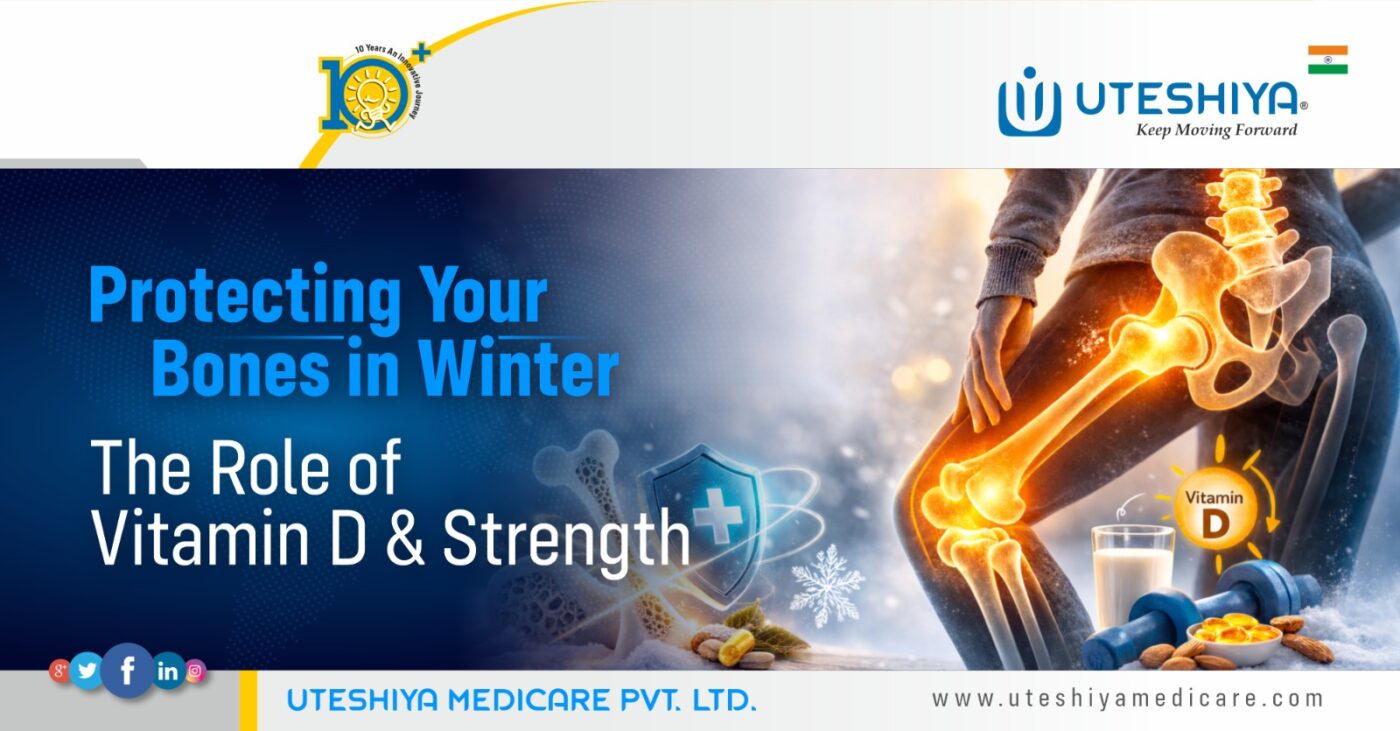
If you feel more joint stiffness or weakness during winter, it may not be just the cold. Reduced sunlight lowers vitamin D production, and less movement weakens muscles that protect your bones. Together, these changes can slowly impact bone health throughout the season. For strong bones in the winter, you need to pay attention to both what you eat and how much you move. Bone health and stability are supported by strong muscles, and vitamin D is a key part of absorbing calcium. When both are kept up, bones stay strong and are less likely to break.
Why Vitamin D Levels Drop in Winter
Vitamin D is often called the “sunshine vitamin” because the body produces it when skin is exposed to sunlight. During winter, especially in regions farther from the equator, sunlight exposure decreases significantly. People spend more time indoors, wear layered clothing, and may not receive enough UVB rays to produce adequate vitamin D.
Research shows that vitamin D deficiency becomes more common during the winter months. Low vitamin D levels reduce calcium absorption in the intestines. Without enough calcium, the body may begin pulling it from bones to maintain normal blood levels. Over time, this weakens bone structure. Adults with low vitamin D levels may experience the following symptoms.
- Increased bone discomfort
- Higher fracture risk
- Muscle weakness
- Fatigue
For older adults, the risk is even greater because natural vitamin D production decreases with age.
How Vitamin D Supports Bone Strength
Vitamin D helps regulate calcium and phosphorus, two minerals essential for bone formation. Without sufficient vitamin D, even a calcium-rich diet cannot fully protect bones.
Strong bones depend on a continuous cycle of breakdown and rebuilding. Vitamin D supports this balance by enabling proper mineralization of bone tissue. When levels are low, bones may become softer and more fragile.
In children, severe deficiency can lead to rickets. In adults, it can contribute to osteomalacia or worsen osteoporosis. Winter is often the season when deficiencies become more noticeable due to reduced sunlight exposure.
The Link Between Muscle Strength and Bone Health
Bones do not work alone. They rely on muscles for support and protection. When muscles contract during movement, they stimulate bones to stay dense and strong. This is known as mechanical loading.
During winter, physical activity often decreases. People may avoid outdoor exercise because of cold weather, slippery surfaces, or shorter daylight hours. Reduced movement leads to weaker muscles, which in turn reduces the stimulation bones need to maintain density.
Weight-bearing activities such as walking, light jogging, resistance training, or bodyweight exercises help maintain bone mass. Even simple indoor exercises can make a difference when done consistently.
Muscle strength also improves balance. Better balance reduces the risk of falls, which is especially important in winter when icy surfaces increase accident risk.
How Cold Weather Affects Joint and Bone Comfort
Cold temperatures do not directly damage bones, but they can increase stiffness and discomfort. Lower temperatures may reduce blood flow to extremities, causing joints to feel tight.
Additionally, people tend to move less when it is cold. Less movement leads to stiffness and reduced flexibility. Maintaining gentle daily movement helps keep joints lubricated and muscles active. In winter, people often drink less water, which may contribute to joint stiffness. Staying hydrated supports overall musculoskeletal health.
Dietary Sources of Vitamin D and Calcium
Since sunlight exposure drops in winter, dietary intake becomes more important. Foods rich in vitamin D are as follows.
- Fatty fish such as salmon and mackerel
- Egg yolks
- Fortified milk and plant-based beverages
- Fortified cereals
- Calcium-rich foods include:
- Dairy products like milk, yogurt, and cheese
- Leafy green vegetables
- Almonds
- Tofu
- Fortified foods
For some individuals, supplements may be recommended, especially if blood tests show a deficiency. It is important to consult a healthcare professional before starting supplementation to determine the correct dosage.
Who Is at Higher Risk in Winter?
Certain groups are more vulnerable to vitamin D deficiency and bone weakness during winter.
- Older adults
- People with limited outdoor exposure
- Individuals with darker skin tones
- People living in northern regions
- Those with digestive conditions affecting nutrient absorption
Regular health check-ups and monitoring vitamin D levels can help prevent complications.
Practical Steps to Protect Bone Health in Winter
Maintaining bone health during winter does not require drastic changes. Consistency matters more than intensity.
- Stay active indoors with simple exercises such as squats, wall push-ups, or resistance band workouts. Even 20 to 30 minutes a day can maintain muscle strength.
- Expose your face and hands to sunlight for short periods when possible, especially during midday.
- Maintain a balanced diet that includes both calcium and vitamin D sources.
- Ensure home safety by reducing fall risks. Use non-slip footwear and keep walkways clear.
- Consider discussing vitamin D testing with your doctor, especially if you experience fatigue or bone discomfort.
The Long-Term Importance of Winter Bone Care
Bone density gradually declines with age. Winter can accelerate this process if vitamin D deficiency and inactivity are ignored. However, proactive care during colder months can prevent long-term damage.
Strong bones reduce fracture risk, improve mobility, and support overall independence. Investing in bone health during winter pays benefits throughout the year.
The Role of Consistency Over Quick Fixes
Bone health does not improve overnight. Many people expect supplements alone to solve the problem, but strength comes from consistent habits. Regular movement, balanced nutrition, and moderate sunlight exposure work together. Skipping exercise for weeks and then trying intense workouts can increase injury risk instead of improving bone stability. Gentle but steady routines are more effective.
It is also important to remember that bone care is lifelong. Winter simply highlights existing weaknesses. When good habits continue beyond one season, bone density, muscle strength, and overall mobility remain stronger year after year.
Wrapping It Up
Winter presents unique challenges for bone health. Reduced sunlight exposure lowers vitamin D levels, while decreased physical activity weakens muscles that support bones. Together, these factors can increase the risk of bone weakness and discomfort.
By maintaining regular movement, ensuring adequate vitamin D and calcium intake, and staying mindful of fall prevention, individuals can protect their bones throughout the colder season. Small daily habits can make a significant difference in maintaining strength and comfort all winter long.
