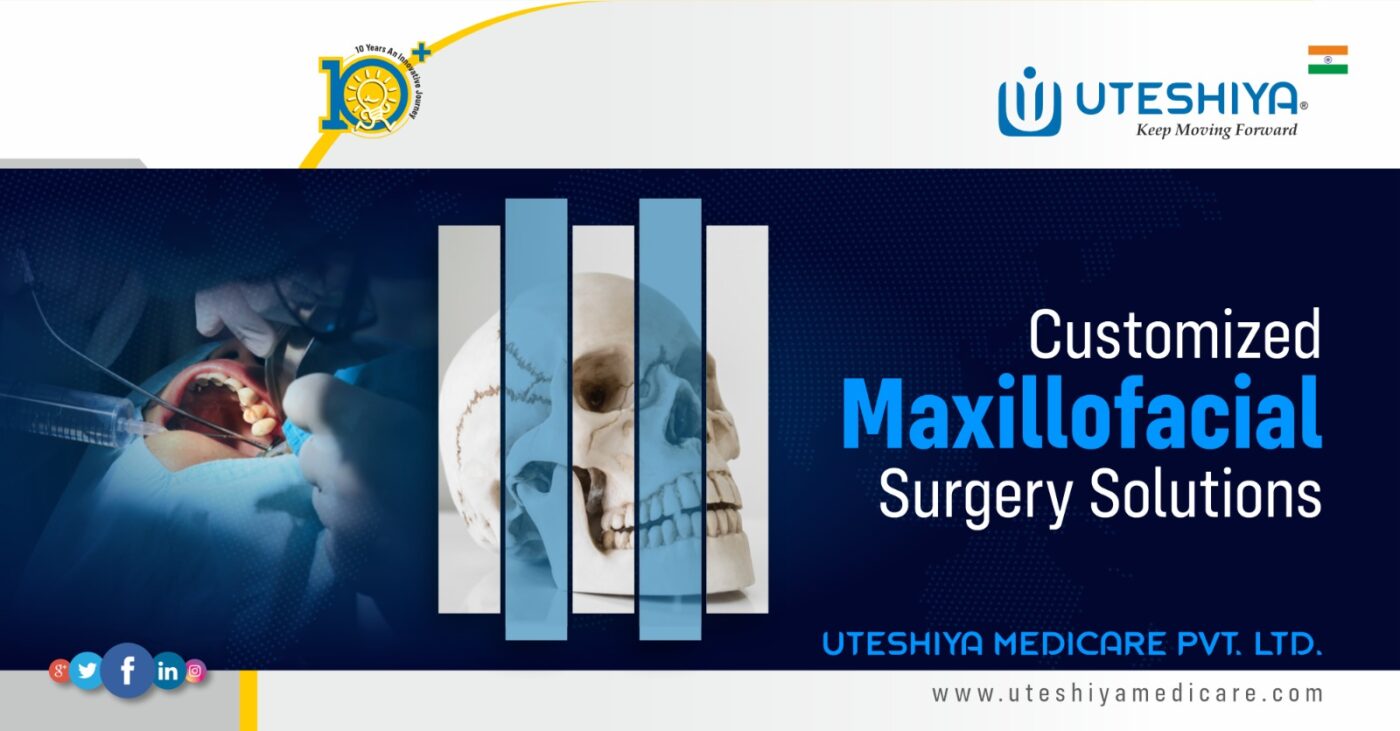
Maxillofacial surgery, which fixes broken faces, removes tumours, corrects birth defects, and rebuilds jaws, is rapidly becoming one of the most exciting areas of medicine in personalized care. Today, surgeons do not always revert to standard plates and meshes. Implants, surgical guides, and models made from a person’s own CT scan and computer-aided design and advanced manufacturing (often 3D printing) are increasingly used instead. As a result, surgery goes more quickly, fits better, and helps patients heal more easily.
It’s essential to understand what customized maxillofacial solutions are, why they matter, the real benefits in clinics, and the numbers on adoption and results.
What “customized” really means.
Most of the time, a CT or CBCT scan of the patient’s skull is the first step in a customized maxillofacial approach. A computerized model is made from that scan. Engineers and doctors work together to make sure that the implant or cutting guide fits the patient’s body perfectly.
Titanium alloys, porous hydroxyapatite, or polymer composites are used to make that design, and it is supplied sterile for the surgery. This means that the implant fits the person, not the other way around.
How modification is altering the activity
Concerning how well generic implants work, there are two issues. For starters, they don’t always exactly match complex anatomical defects, so during surgery, surgeons have to bend and adjust the hardware. Second, intraoperative modifications consume time and introduce variability. Custom implants and guides eliminate guesswork.
For example, surgeons can practice exactly planning osteotomies on 3D models. This reduces the guesswork during surgery, which takes longer and causes more blood loss.
Customized implants can improve surgical accuracy and shorten operating times compared to standard methods, as shown by real-world proof. Because of these benefits, the anesthesia lasts shorter, and the recovery is more reliable.
Why Customized Solutions Improve Patient and Surgeon Results
There is now consistency between clinical studies and comparative reports. When patient-specific titanium implants are used to fix facial defects, the results are good in terms of function and appearance, with good integration and low complication rates at mid-term follow-ups. When there is cancer resection, traumatic defects, or disease-related bone loss, patient-matched implants typically restore the shape of the face and the ability to chew.
As a specific example, during the recent mucormycosis outbreaks, some centers used 3D-printed implants to fix maxillary flaws and reported good surgical fit and functional outcomes in a small group of cases. That experience taught me that unique solutions can make a big difference when the body isn’t working right or bones are missing.
Materials and how they work biologically
It’s important to study materials. Bioactive coatings and porous implant designs help bone grow into the device rather than just against it. This is called osseointegration. The aim of the new porous hydroxyapatite and carefully engineered titanium lattices is to combine an exact anatomical fit with good biology.
This will help the body heal, reduce stress shielding, and improve long-term fixation. Early clinical studies with porous HA and lattice titanium show that they can be combined successfully and that patients are satisfied with the results in reconstructive cases.
The Significance of Aesthetic and Psychological Advantages
It’s not enough for maxillofacial surgery to restore basic function; it’s also about improving how someone feels about themselves. Personal identity and social interaction depend on the face. Even small changes to balance and shape can have a significant effect on mental health and confidence. Customized implants enable surgeons to precisely match.
- The cheekbone’s natural curves
- Smooth changes in the face
- Eyes with softly shaped orbits
For people who have been through trauma or are recuperating from cancer treatment, looking like themselves again can be as important as getting their tongues back to normal. Patients can feel like themselves again when they get personalized care.
Improved Planning, Limited Unexpected Situations
Predictability is another advantage of customization. Before going into the operating room, surgeons can now virtually plan every step of a surgery. Using digital practices, teams can:
- Verify implant fit in advance
- Assess correct alignment or occlusion virtually
- Make sure the implant fits before you put it in.
- Virtually fix the alignment or occlusion.
- Be ready for problems with soft tissue.
So instead of changing things in the middle of the surgery, it becomes the guided performance of a well-thought-out plan. That makes everyone less stressed and helps patients and doctors do better.
Where We See the Biggest Improvements in Applications
More and more, customized methods are used in-
- Reconstruction of the jaw (orthognathic surgery)
Straightens teeth, improves chewing, and raises the face.
- Trauma and fixes after a fracture
Restores proper anatomical structure in complex injuries
- Craniofacial problems and birth defects
Helps kids grow normally and improves their balance as they grow.
- Reconstruction after a tumor or infection
Fixes the structure after a violent disease has broken bones
As technology improves, these uses are growing rapidly.
Why Personalizing Maxillofacial Care Is Growing
Customized implants are now a standard of care in hospitals and surgery centers worldwide, not just a beneficial extra service. Since 2020, the number of surgeries that use patient-specific implants has grown very quickly, mainly when they are used to fix injuries or cancer.
Surgeons say that the implants fit better and are placed more smoothly in the operating room. After surgery, patients say they can do things naturally and need fewer corrective treatments. More clinical success stories mean that more people can get these specialized solutions and trust them for everyday surgical practice.
Why Personalized Implants Help Patients Heal Faster
Personalized implants not only make the face look better and line it better, but they also help the body heal more quickly and easily. Since the implant fits perfectly, doctors don’t have to modify the bone as much, which reduces pain, swelling, and time spent in the operating room. Patients can return to their daily lives more quickly and have a more comfortable recovery when they have greater stability and natural support for their facial muscles.
Wrapping It Up
Modern patient care is being redefined by customized maxillofacial surgery. Surgeons may now develop implants that meet each patient’s anatomy, appearance, and functional needs, rather than forcing them to adapt. This individualized technique improves facial function, natural looks, and surgery speed, safety, and comfort. It improves recuperation and enhances patient confidence and satisfaction.
Foremost, customized solutions transcend mere structural restoration; they establish identity, comfort, and an improved quality of life. Maxillofacial care will become more accurate, compassionate, and customized as technology and surgical skill progress. Innovation and human understanding make this development powerful, as it saves and restores lives.
